frequencies

INTRODUCTION
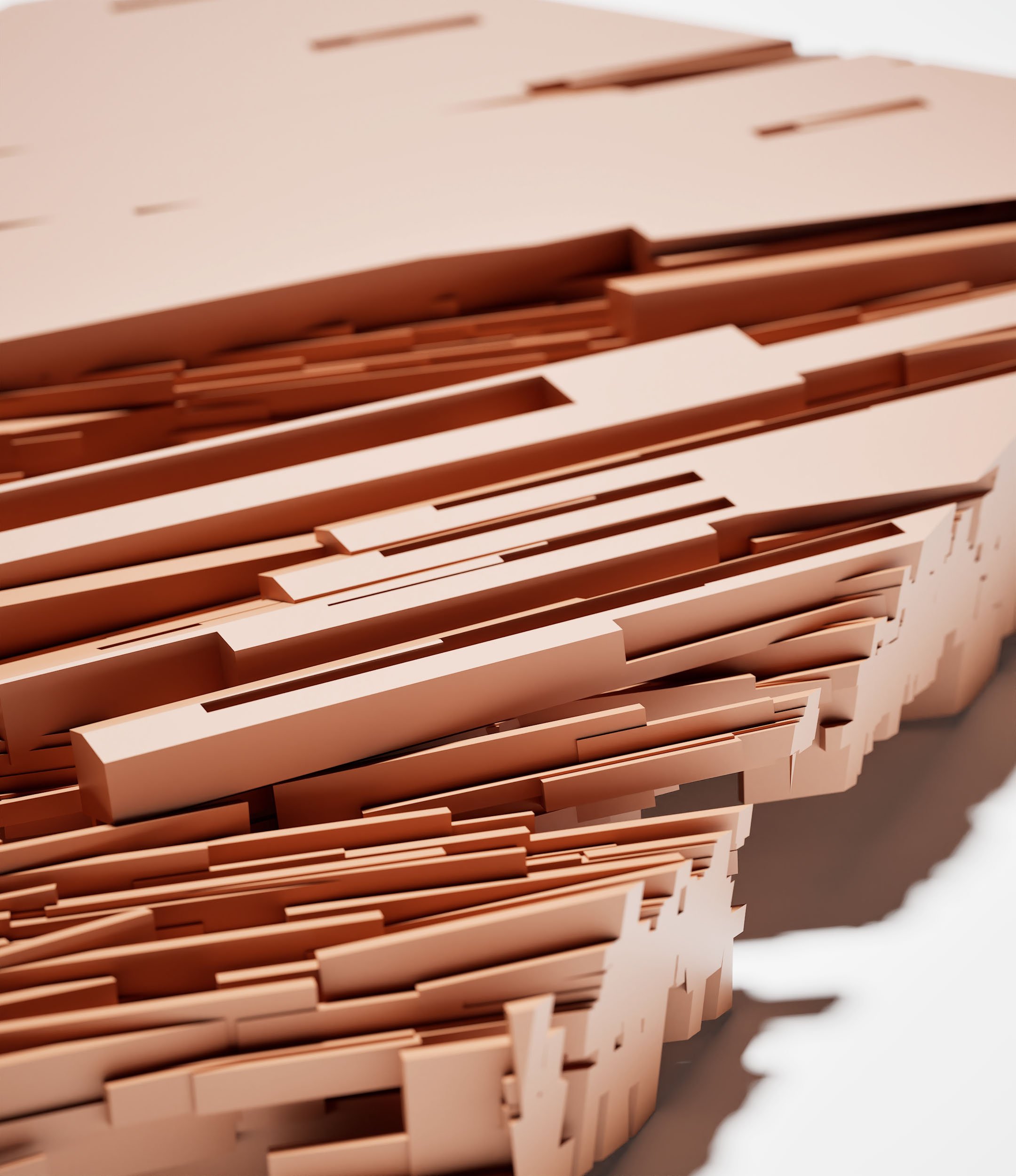
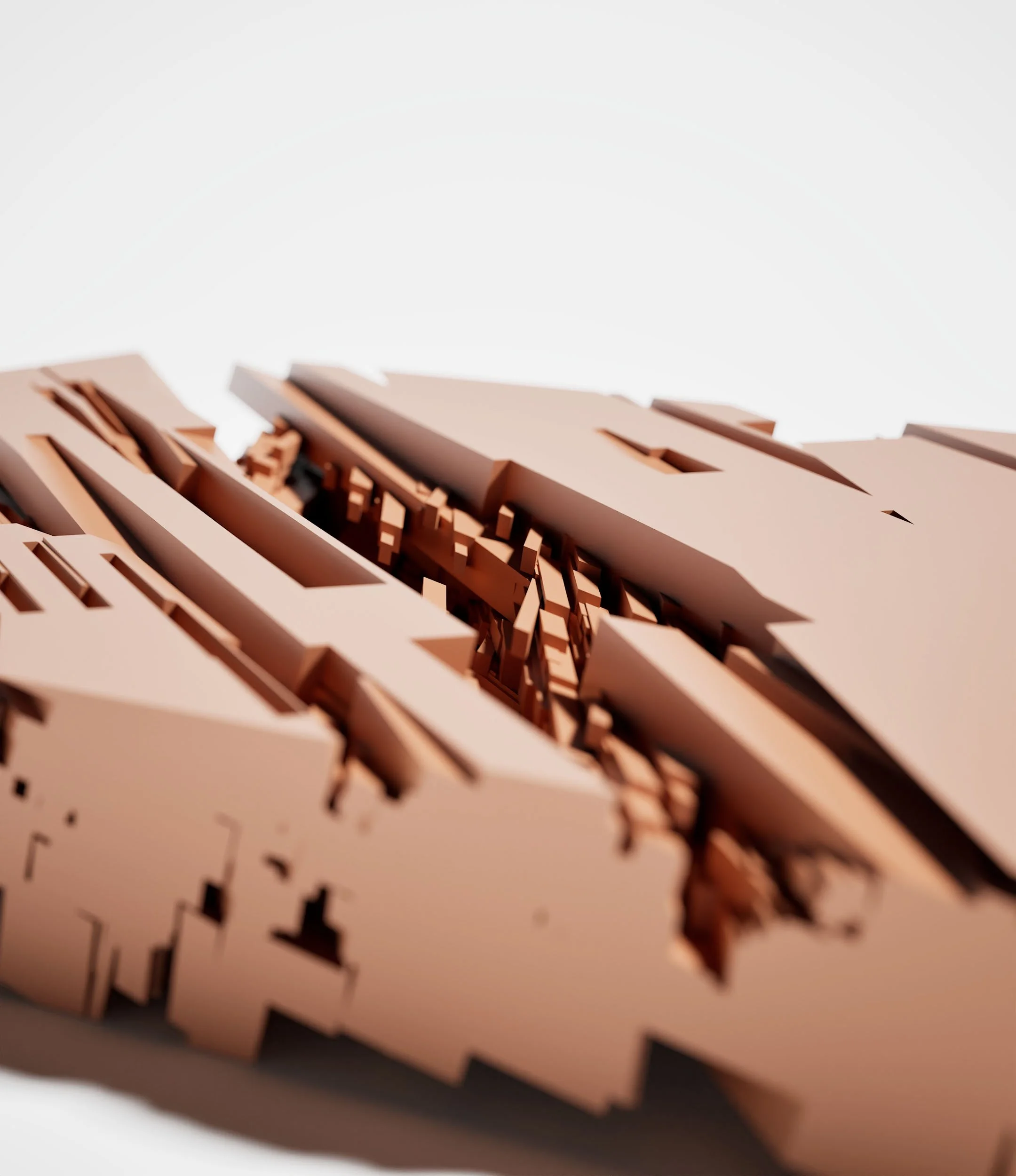
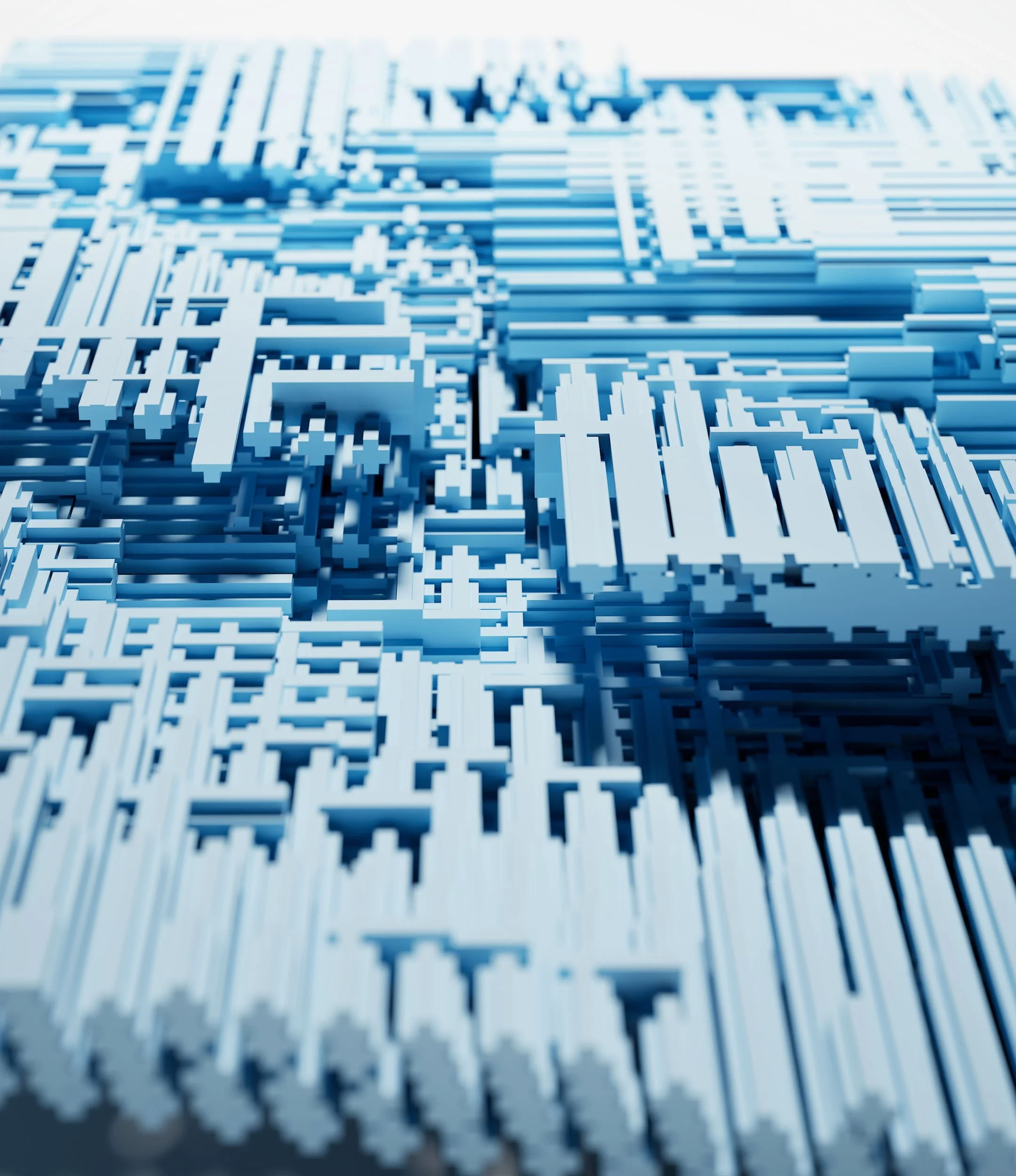
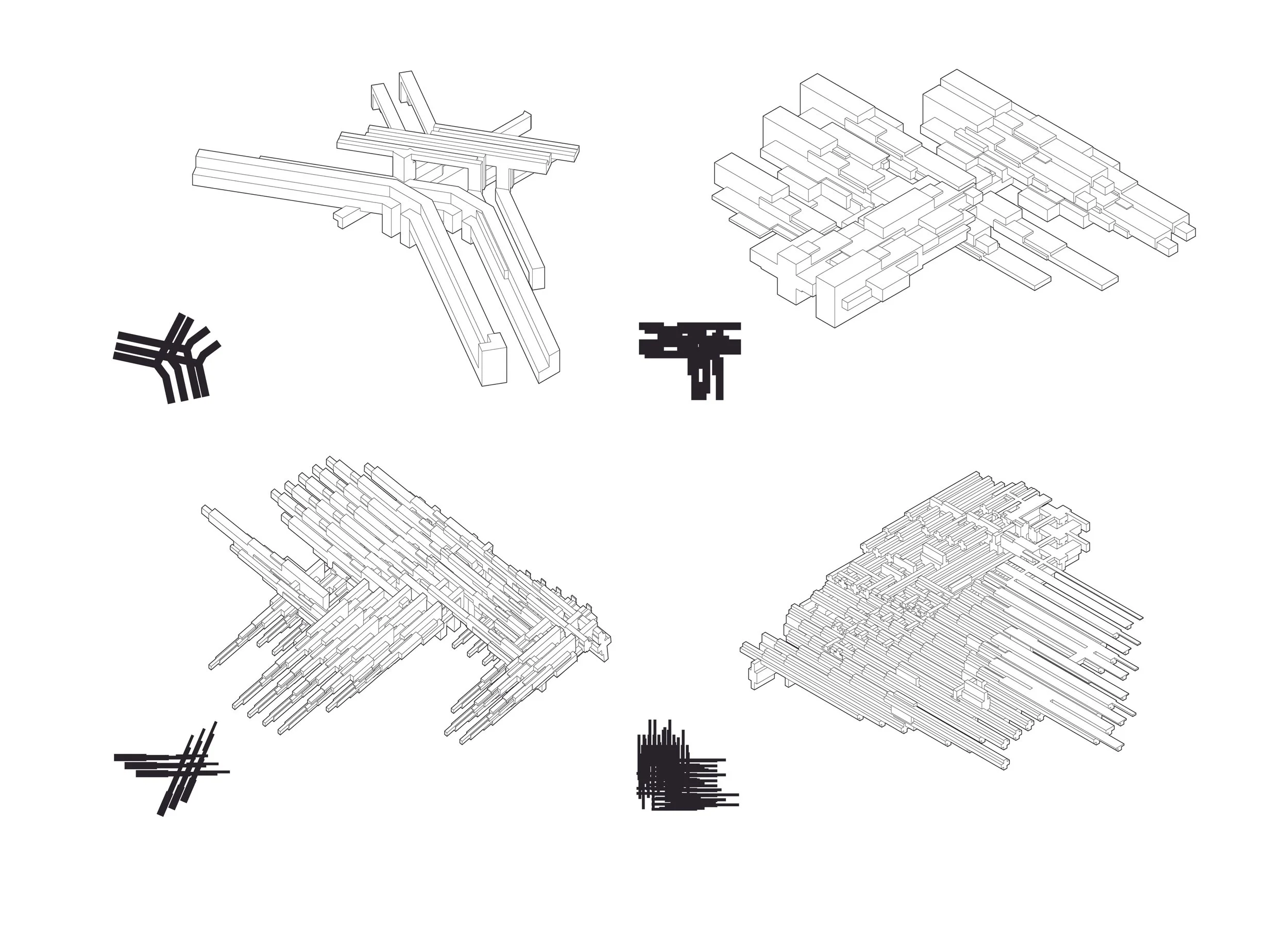
Developed to investigate the experimental modalities of architectural production, Frequencies is an ongoing research project that examines the procedural methods of digital modeling. Synthesizing techniques that permeate in design-based softwares, this research examines the generative arrangements of computational construction, utilizing its generative systems to produce compositional form. Each panel in the series explores a shape language that emerges from how volumes interact in modeled space. As a collective body of work, they are emblematic studies that balance an intricate language of masses and armatures by means of both an algorithmic and volumetric synthesis. Considering the process through the lens of artful construction and applied technology, the works explore an approach to generative design that digitally ruminates on tectonics in architecture.
Sectioned from a larger constellation of spatial encounters, the rectangular frame captures the lively interactions of modeled conditions, containing a mixture of intricately composed objects in various states of formal resolution. Responding to forms that emerge through this process, the compositions consider discreteness and modularity to produce densely layered geometries, threading together multiple scales and intensities. The formations they create are at times packed into solid blocks, built up into thickened masses, or linked together to produce lattices and frames. Qualities that emerge from these interactions transform from a singular reading of parts into a combined aggregate, coalescing in ways that bundle, bunch, and mat. Rather than resolving spatial relationships between those elements, the compositions remain suspended in mutated states, at times appearing only partially resolved, caught in a dynamic interplay that both constructs and unravels.
Finding a formal identity for each panel lives in the systems that fuse and overlap, emerging from how they are superimposed. Whether forms assemble in ways that appear as a textural filigree or an intricately woven lattice, their volumetric interactions are an interwoven armature that builds in progressions. As geometries collide and coagulate, their intersecting features become tectonically infused: formally dependent on the layered strata that is accumulated. Determining how geometries engage one another is both procedural and experimental, challenging their algorithmically defined structure to spatially compete and conjoin. Their formal resolution emerges through shifts in scale and density, exploring novel combinations that inflect their procedural language, creating an index of characteristics that arise by automation yet recombine in ways that mediate the effects of their coded anatomy.
Procedure by design
Alongside advanced techniques for fabrication and scripted design, architectural production is intertwined with computational methods that incorporate evolving means of applied automation. Using processes that are integrated within digital modeling, three-dimensional geometries can be configured without their direct manipulation, generated from a statistical infrastructure capable of creating more elaborate systems. Visually representing the intricacies of these systems requires that geometries exist in a digital environment that simulates their appearance accurately. The data that is represented by modeled geometries contain a range of properties, relating their appearance and effects with a plethora of information. This relies on vast amounts of computational processing, dividing parameters into smaller functions to be more manageable within digital modeling engines.
C-language scripts execute programs to interpret these visual effects with a more lightweight syntax, conveying three-dimensionality more efficiently with shaders. Shaders display the effects of objects in a scene without containing the objects themselves, making them ideal for the changing conditions of gaming environments—set-designing a virtual space. Qualities associated with a geometry, like its lighting or material properties, can be extracted and reassigned, programmed to pass this information efficiently between objects and methods. What programming language defines as objects and methods can be more technically described in modeling software as data and context, intertwining their relationship to define how geometries react to different situations. When generated by means of simulation, objects require a digital scenario to operate within, otherwise they remain inert. If the scenario is the relationship between two modeled cubes for example, their proximity, scale, or orientation can define an interaction that creates an identifiable characteristic in the model—not just in a visual sense, but more importantly, a metric one.
Calculating the parameters of this interaction, this characteristic can be represented with a value to assign the same interaction elsewhere in the model. As this data builds into a larger framework, it becomes the behavioral switchboard for producing variations of form, transforming the shape and appearance of objects based on how their characteristics are woven and rewoven together. The conditions built from this procedure are interconnected and operationally linked, retaining their editable structure under systematic progressions that expand and contract. Geometries conform to this underlying logic as an informational fabric, cohesively influencing how their combined forms are altered.
Softwares like Houdini and Blender use node networks to generate components that build these systems from datasets into modeled forms. Changing in shape, size, and position, procedural methods can interpret how objects are formed, tuning specific parameters that modify their features and alter their behaviors internally. Foregrounded in this process is the profound number of permutations that are possible, programmed by actions that amplifies the complexity of forms to create infinite variations using only a few basic rules. Like field operations or agent-based modeling, procedural modeling also uses constraints to develop forms, mediating a response that fits within its topological abilities. (Moncrief 2019) Programming data to generate three-dimensional volumes however presents a different challenge—one that requires a rethinking of how the interactions are built, oftentimes through an amalgam of modeled forms created with various levels of control.

Random Distribution of 40,000 Squares Using the Odd and Even Numbers of a Telephone Directory, 50% Blue, 50% Red. Francois Morellet. 1960.
Enid A. Haupt Fund ©2026 François Morellet / Artists Rights Society (ARS), New York/ADAGP, Paris.

Untitled. Rudolph Stingel. 2002.
The Collection of Frances R Dittmer.
artful systems
The structures that emerge from these tactics engage an ideological framework that is rich with abstraction, following practices associated with artists like François Morellet and Rudolf Stingel, using systems to index a larger methodology. In Morellet’s geometric paintings, systems are revealed through procedure. Avoiding figurative representation and gestural content, his works turned towards an aesthetic that relied on purely mechanical components to define their compositions. Lines and colors become codified, given constraints for their operations on the canvas to accumulate and interact within a predetermined structure. At times, these visual elements seem to follow a mathematical progression that builds in density, or superimposes overlaps and interference, creating new interactions from the spatial occurrences that happen within the 'picture field'. But what is captured within this frame is conditional and depiction-less (Alberro 2019), generated from rules that rationalize their arrangement.
These experiments are elemental and serial, where Morellet interrogates an imperceptible logic that is internal to their relationship as complex systems. Random Distribution of 40,000 Squares exemplifies this methodology. Using a grid to visually subdivide the canvas into a matrix, Morellet filled in each square sequentially according to the odd or even numbers derived from a phone book. Creating a color field of adjacent squares, the resulting pattern vibrates with a statistical rhythm that organizes its randomness. This instructional approach yielded what Morellet called "visually precise yet unpredictably generated abstractions." (Van der Marck and Kotik 1984) Considering the realization of his works as being devoid of composition, works like this emphasize art as analytical construction—not as an expression of the artist, but as being generated from methodical programming.
Morellet’s playful commitment to rigorous objectivity and systematic analysis anticipates a shift in critical discourse that would not fully mature until decades later. In 1981, Douglas Crimp’s influential essay The Death of Painting diagnosed modern painting as art forms capable of sustaining critical autonomy. (Crimp 1981) By advocating for new approaches, Crimp helped legitimize a theoretical framework in which painting could adapt its medium in step with other conceptual artforms. This attitude resonates in the work of Rudolf Stingel, whose practice reframes painting as a medium for exchange. In 1989, Stingel articulated his process through four screen-printed panels titled Instructions, outlining techniques for replicating his works.
Stingel's silver paintings exemplify this logic, introducing industrial panels like Celotex—an aluminum foil-faced insulation board—to capture the expressive features inscribed on its reflective surface. Creating three-dimensional impressions in the foam underneath, markings interfere with its shiny appearance, producing a counter-relief that preserves scrapes, scratches, and dents. (Lancelin 2025) Following his instructional edict, Stingel exposes these unorthodox methods to offer revelatory insights for the uninitiated viewer, teaching and provoking this interaction for them to participate. Instead of pursuing a desired outcome, he moderates an abstraction that is accessible and responsive, initiating the procedure to then mutate through its reinterpretation. (Beck 2025) Rather than guarding the artistic individuality of his works being created by only his hand, he sets up the rules to guide how the encounters proliferate into systems.
This inviting examination into materials marks a point in Stingel's work where his methodology conceptually evolves from being about pure intervention to an orchestration of conditions. By offering a manual of operations for others to follow, Stingel reshapes an aesthetic program that is illuminated by collective interactions, allowing the visual and physical vocabulary of the works to agglomerate and multiply. Overlapping at various scales, the material retains the vibrancy of gestures in counter-relief, as the compositions spatially build in density. The consequential actions that shape each work contains an immediacy that emerges through a kind of randomness–not in their structure, but in their formation. Examining this within the material, the serial repetition encodes an intelligence that lives beyond the constellation of these events. Stingel mediates their afterlife too, suspending their record of abrasions through electroplating, solidifying their embedded conditions in copper, nickel, and gold.
In Studies in Tectonic Culture, Kenneth Frampton punctuated tectonics as the meaningful articulation of materials and structures to describe the expressive logic of building. (Frampton 1995) Creating legible relationships between forms, it conveys how architecture is assembled, revealing the ligaments of construction. Broadening this definition in a contemporary context, the discourse about architectural tectonics has evolved in phases, rethinking its formal interpretation in a digital age—from material assemblies to informational logics. (Carpo 2017) Computation reconsiders tectonics as embedded systems, using processes that logically generate and organize modeled forms. Thinking of tectonic methods as being the interaction of components instead of materials, objects become the anatomical framework for building—defining their characteristics through interactions, regardless of whether they occur as physical or digital matter. (Lim and Liu 2009)
Alberro, Alexander. François Morellet’s Concrete Art of the 1950s. Yale University Press, New Haven, Connecticut, 2019, pp. 38–45.
Beck, Jessica. Rudolf Stingel: A Trace. Gagosian Quarterly, Winter 2024 Issue. Gagosian, February 15, 2025. gagosian.com/quarterly/2024/11/15/essay-rudolf-stingel-a-trace/.
Carpo, Mario. The Second Digital Turn: Design beyond Intelligence. MIT Press, 2017.
Crimp, Douglas. The End of Painting. The MIT Press. October, Vol. 16, Art World Follies (Spring, 1981), pp. 69-86.
Frampton, Kenneth. Studies in Tectonic Culture: The Poetics of Construction in Nineteenth and Twentieth Century Architecture. MIT Press, London, UK, 1995.
Lancelin, Hervé. Rudolf Stingel: The Demolisher of Painting. ArtCritic, January 29, 2025. www.artcritic.com/en/rudolf-stingel-the-demolisher-of-painting/.
Lim, Chor-Kheng, and Yudong Liu. New Tectonics: Towards a New Theory of Digital Architecture: 7th Feidad Award. Birkhäuser, Basel, Switzerland, 2009.
Moncrief, John. “Intro to Procedural Modeling: Not Just Another Rock Generator.” SideFX Houdini via Game Developers Conference 2019, Vimeo, 21 Mar. 2019, vimeo.com/325762826?fl=pl&fe=vl.
Van der Marck, Jan, and Charlotta Kotik. François Morellet, Systems: Essays. Albright-Knox Art Gallery, Buffalo, New York, 1984.
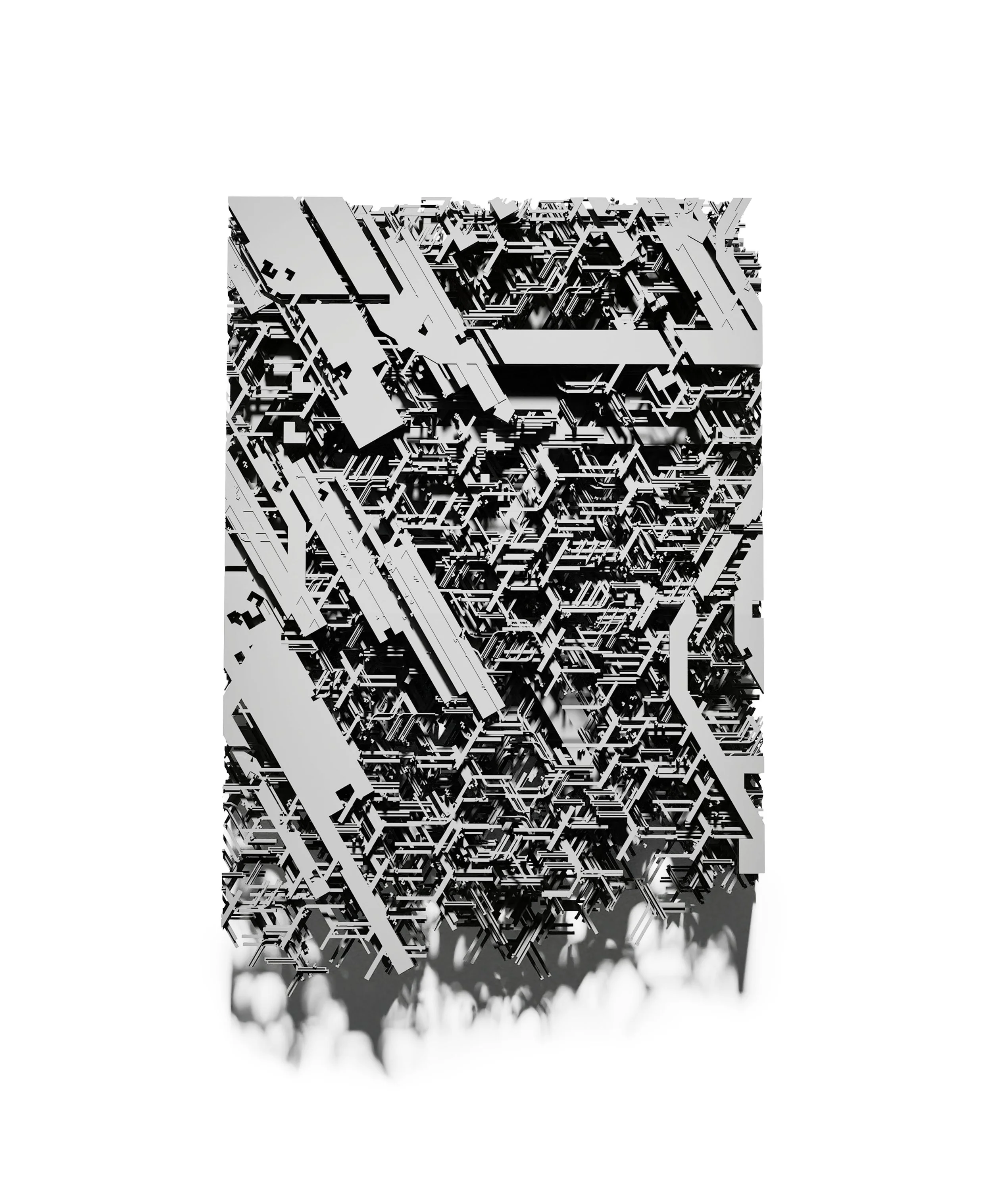
Kenda. Triaxial Weave.

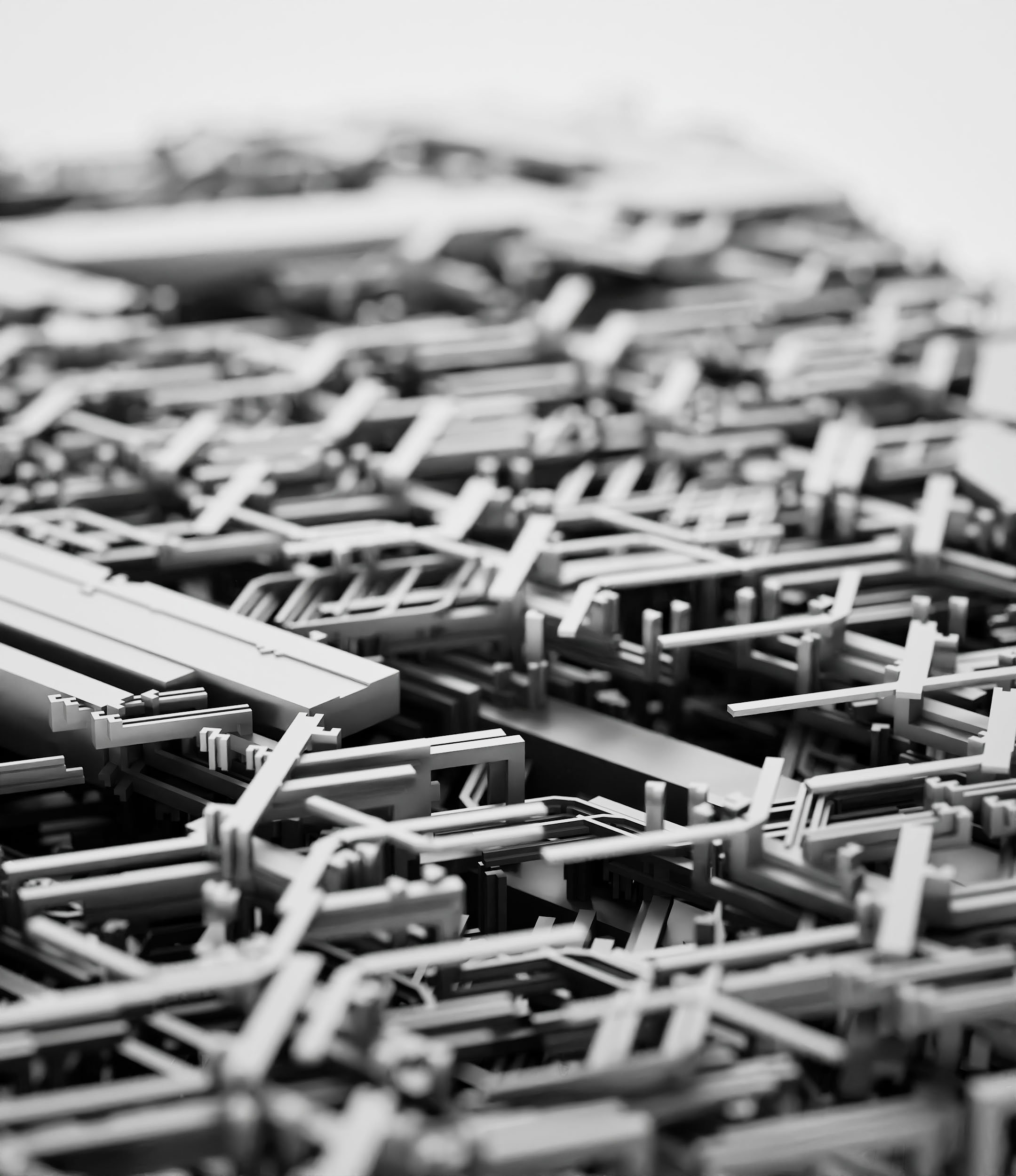
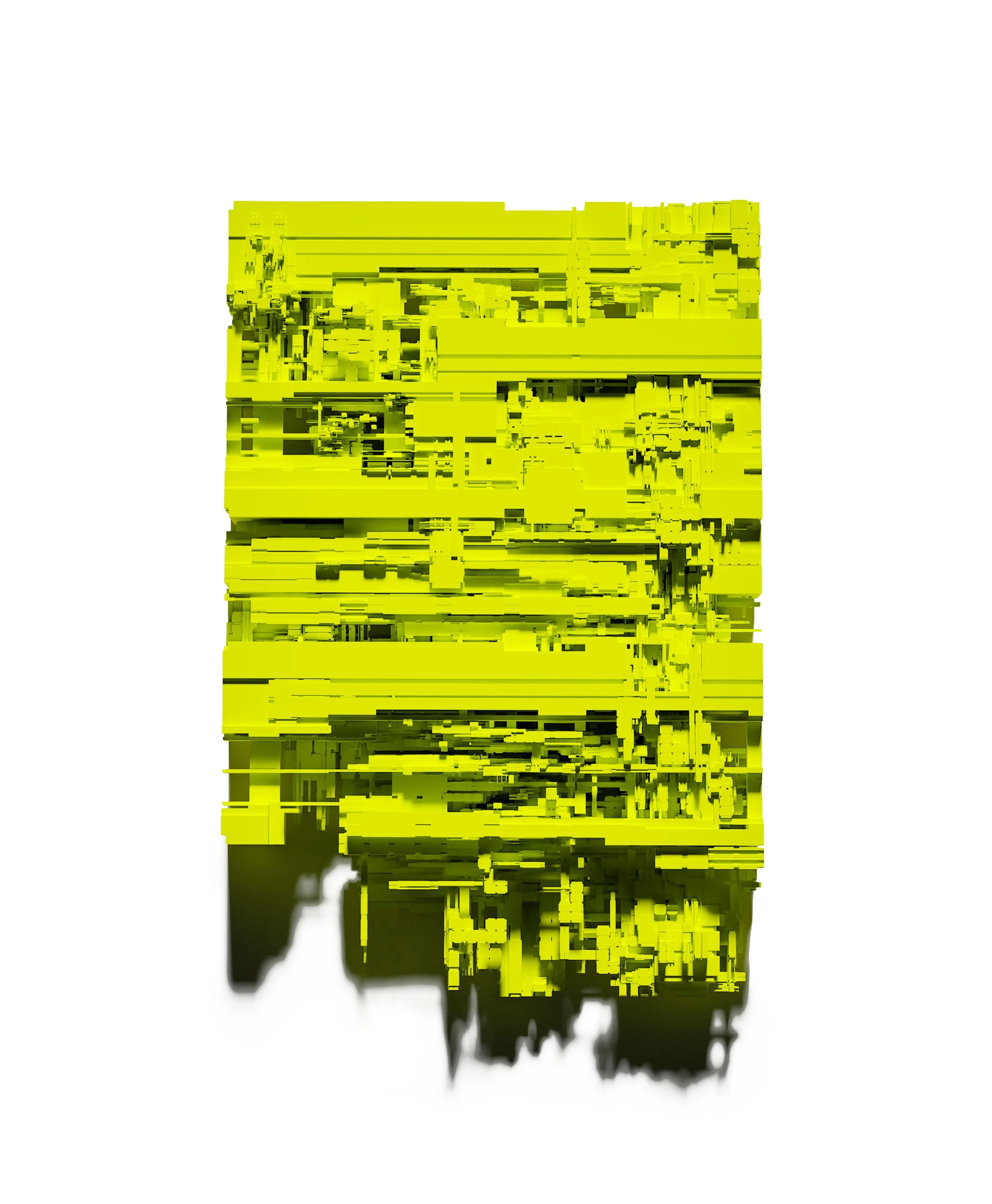
Citron. Clustered Pockets.
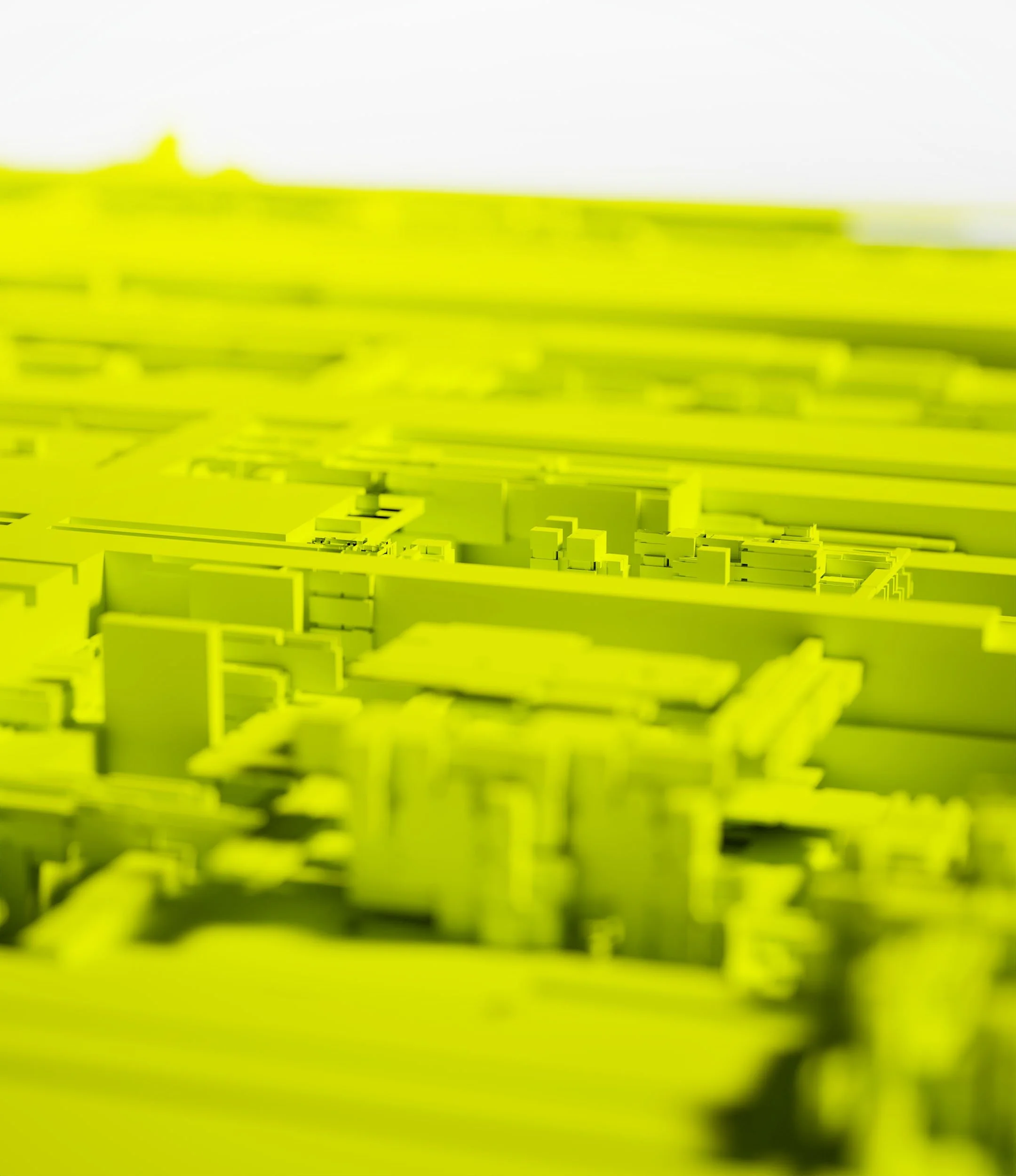
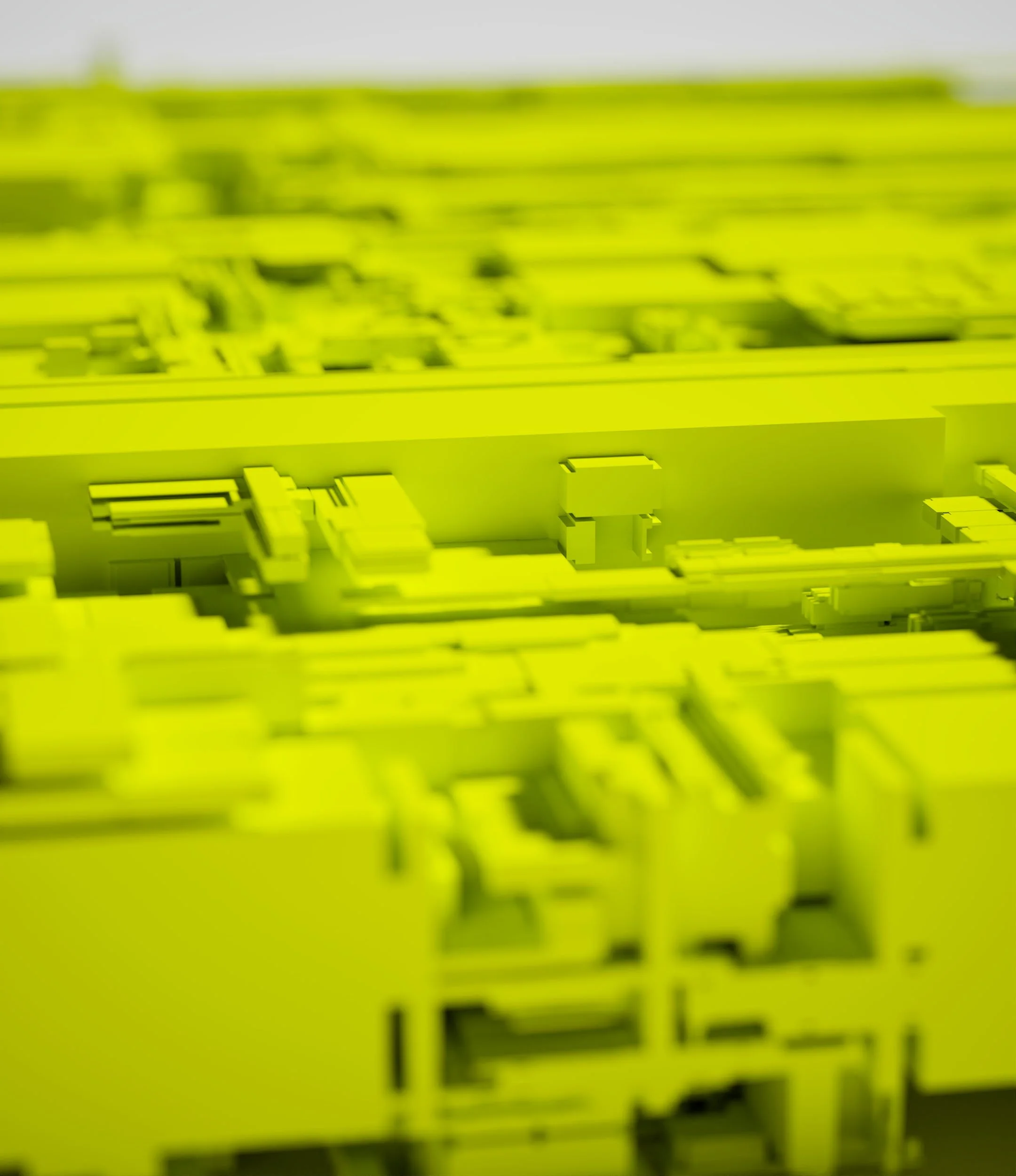
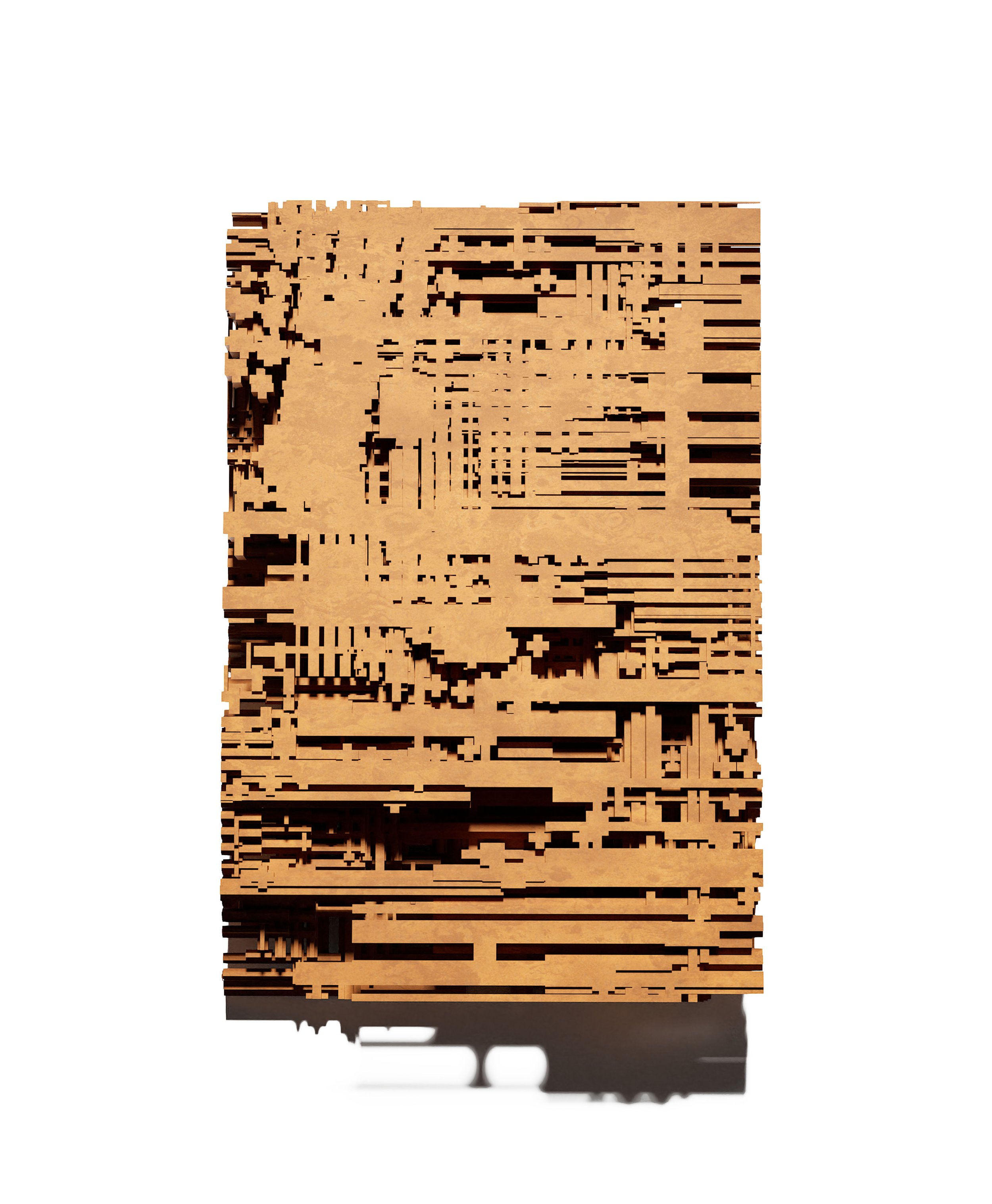
Oletti. Matted Strands.


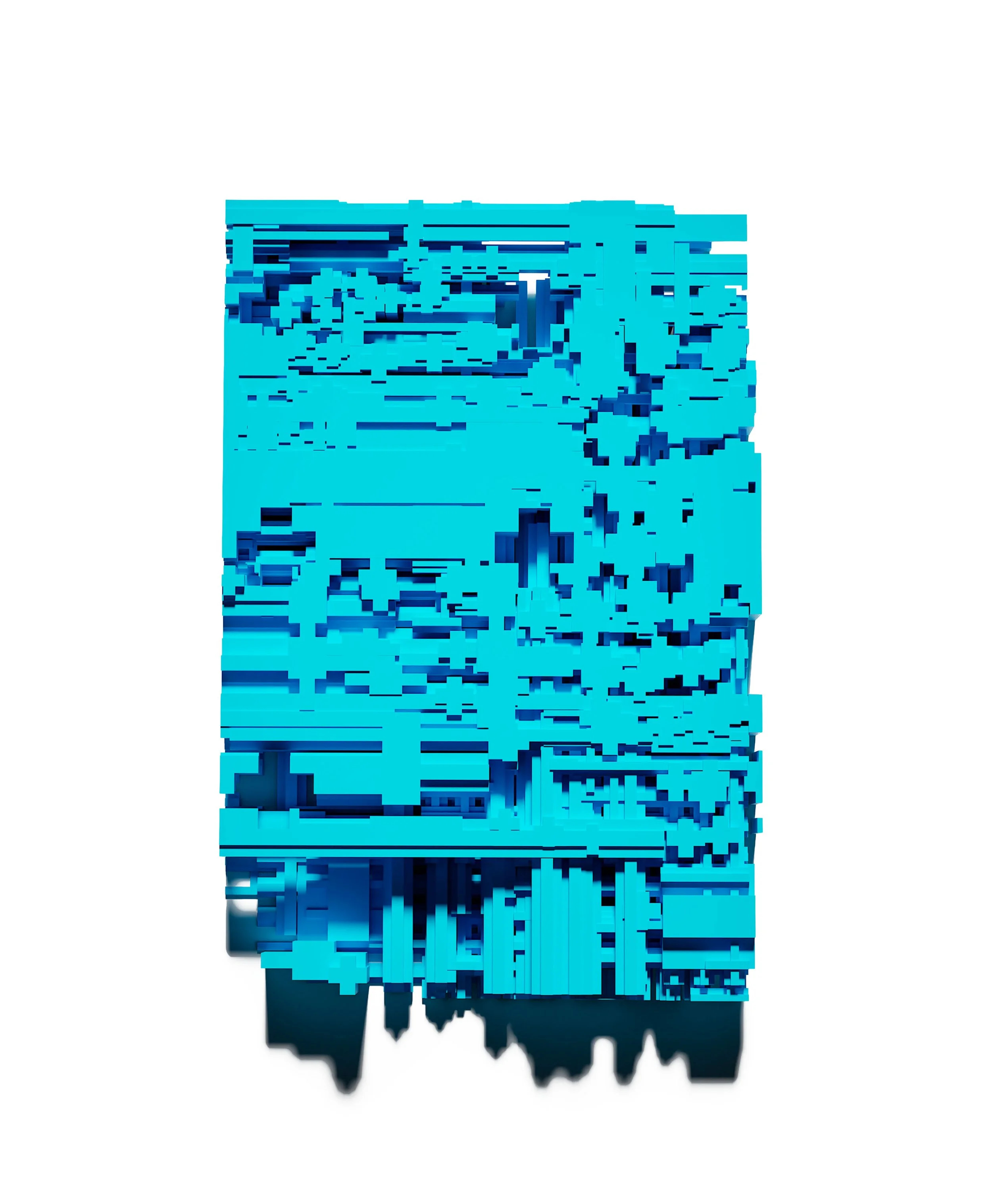
Bobba. Laminated Mass.
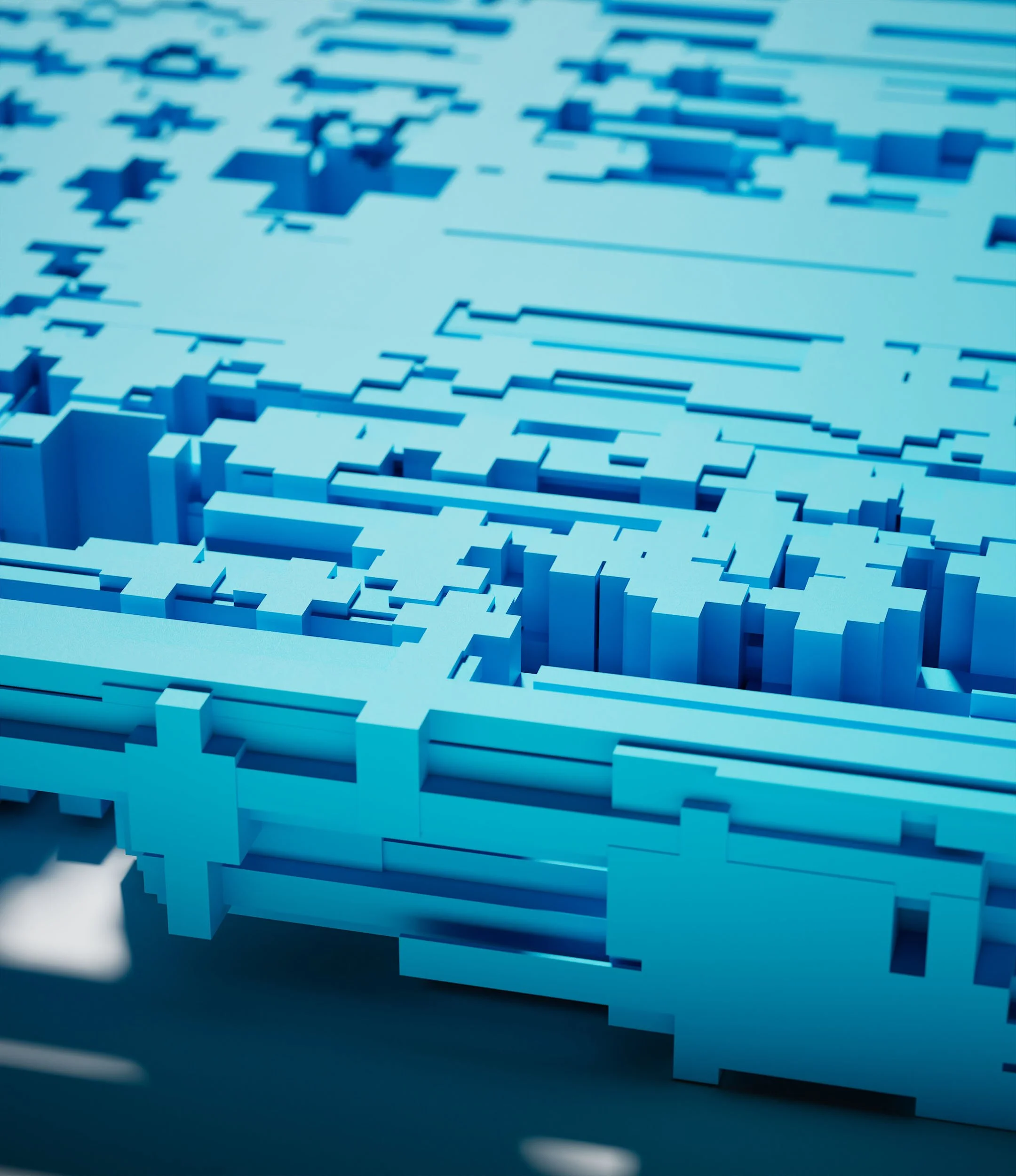

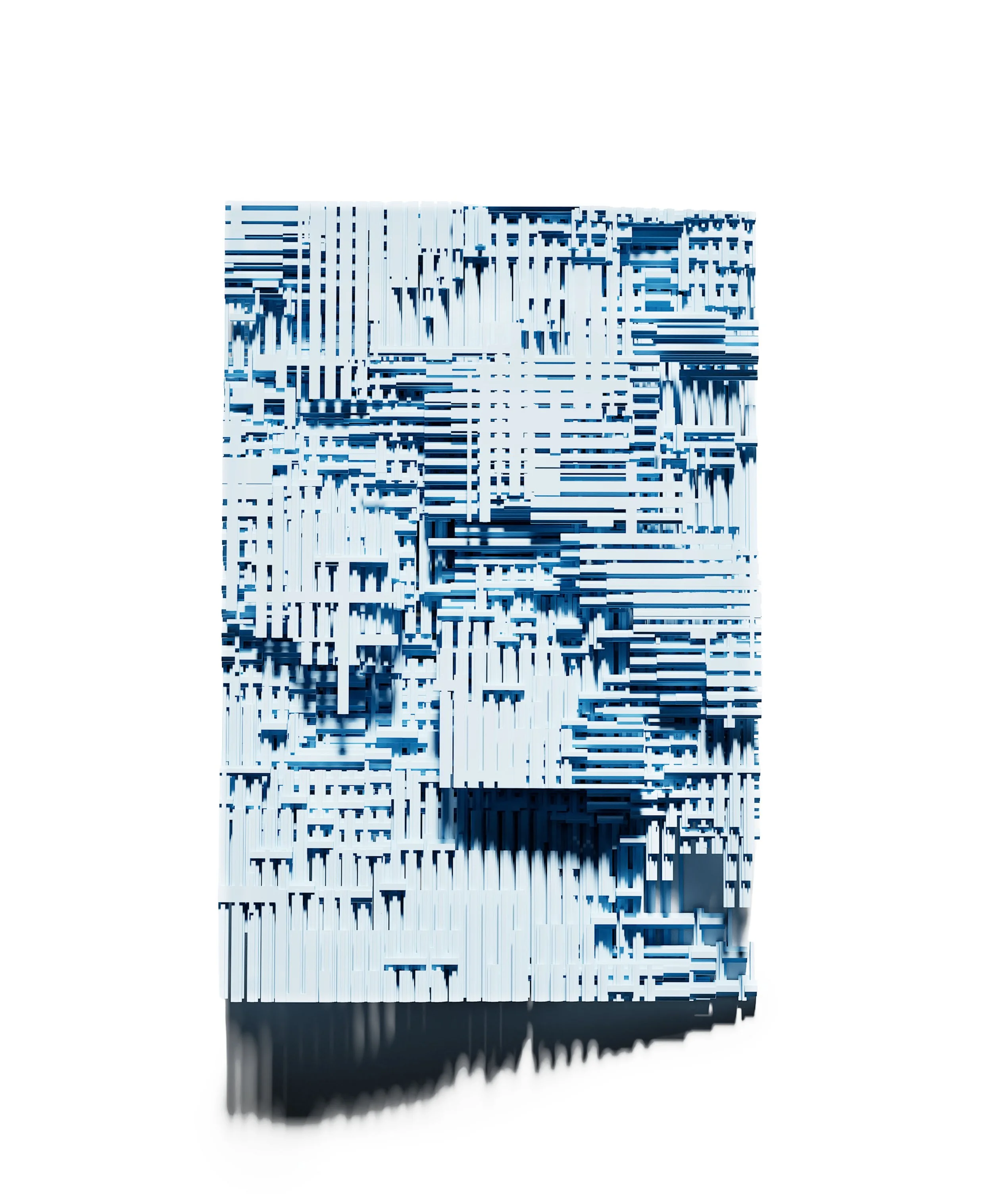
Cascade. Cross Lattice.


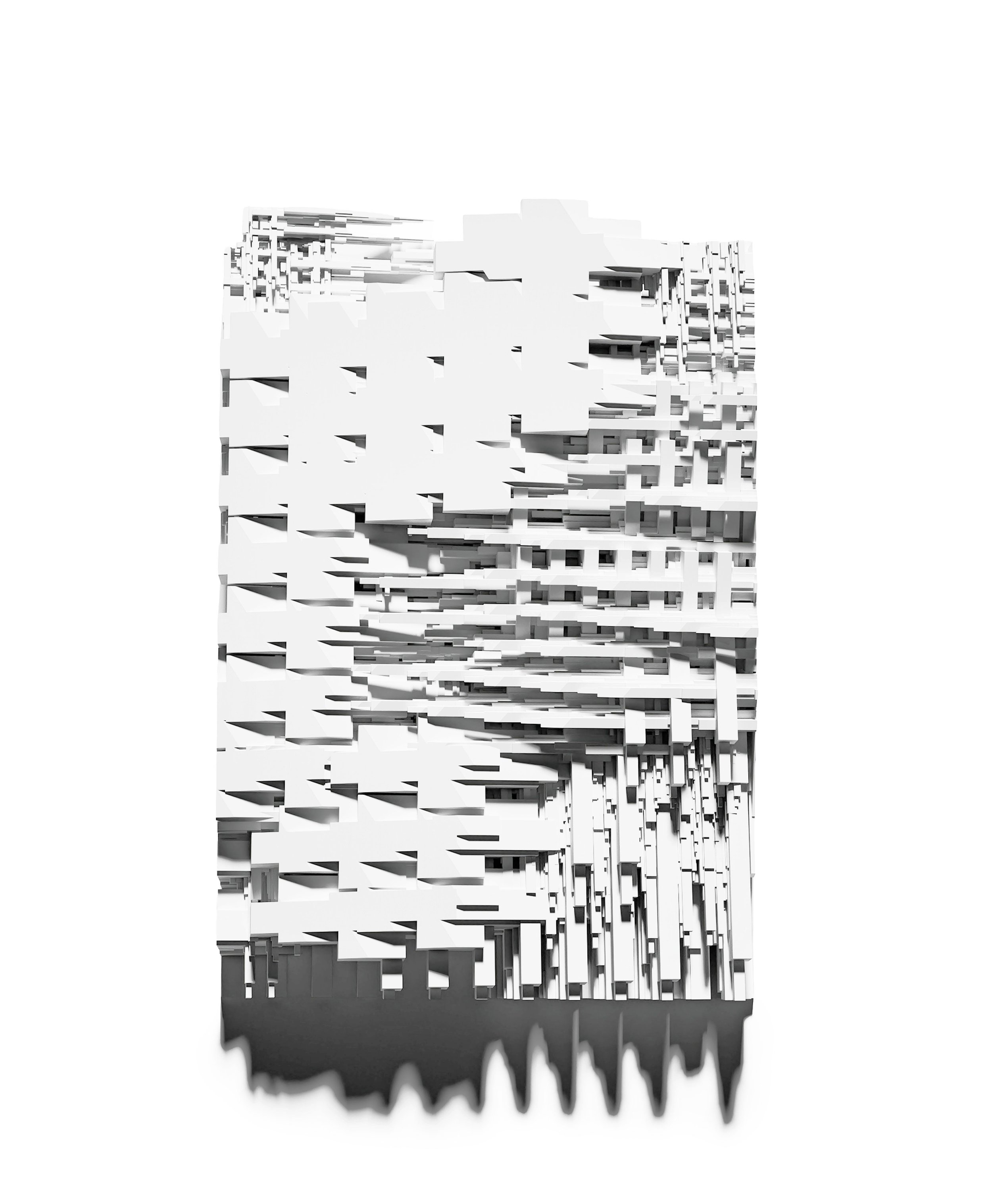
Coupler. Staggered Trellis.


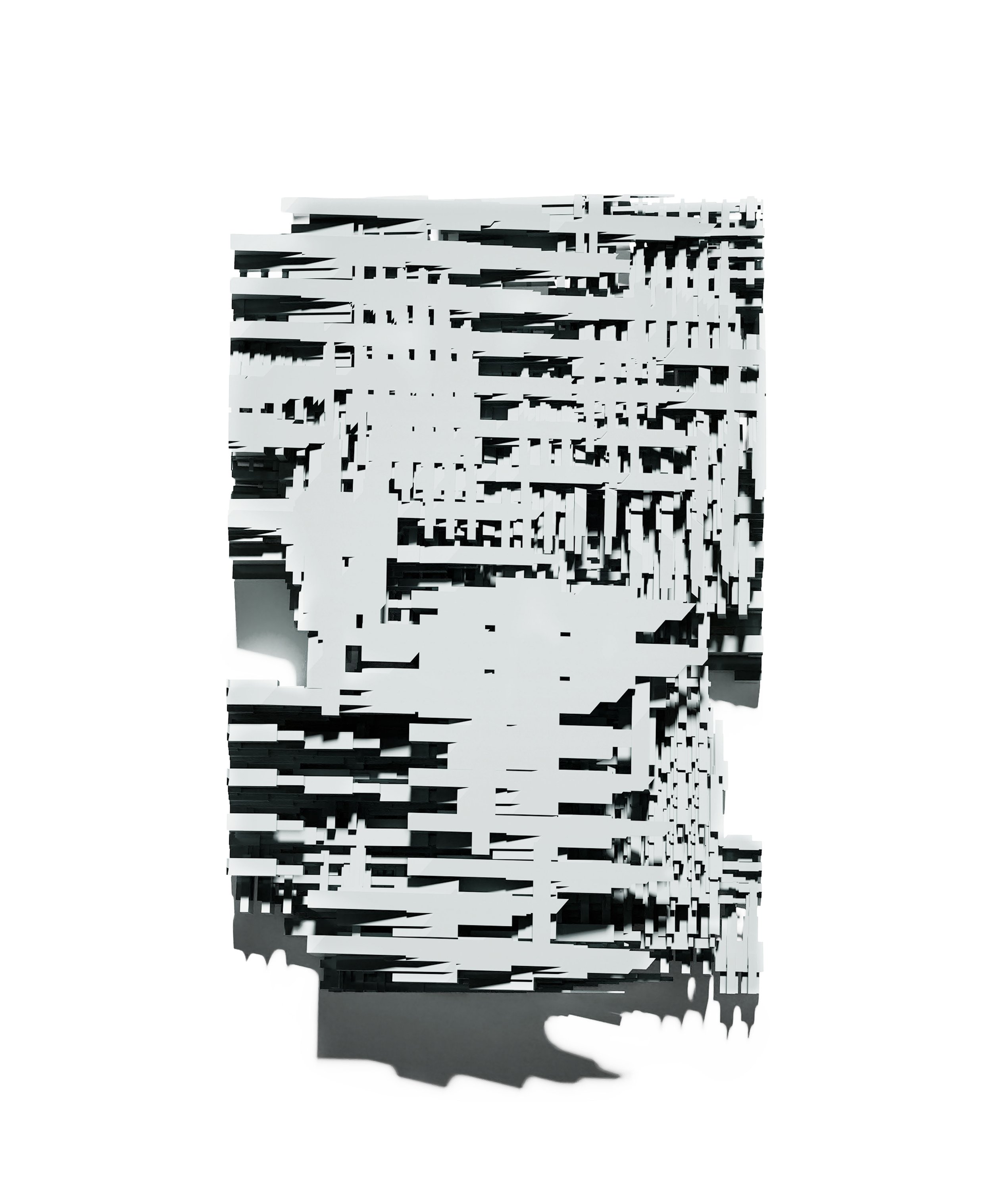
Jammer. Jointed Trellis.


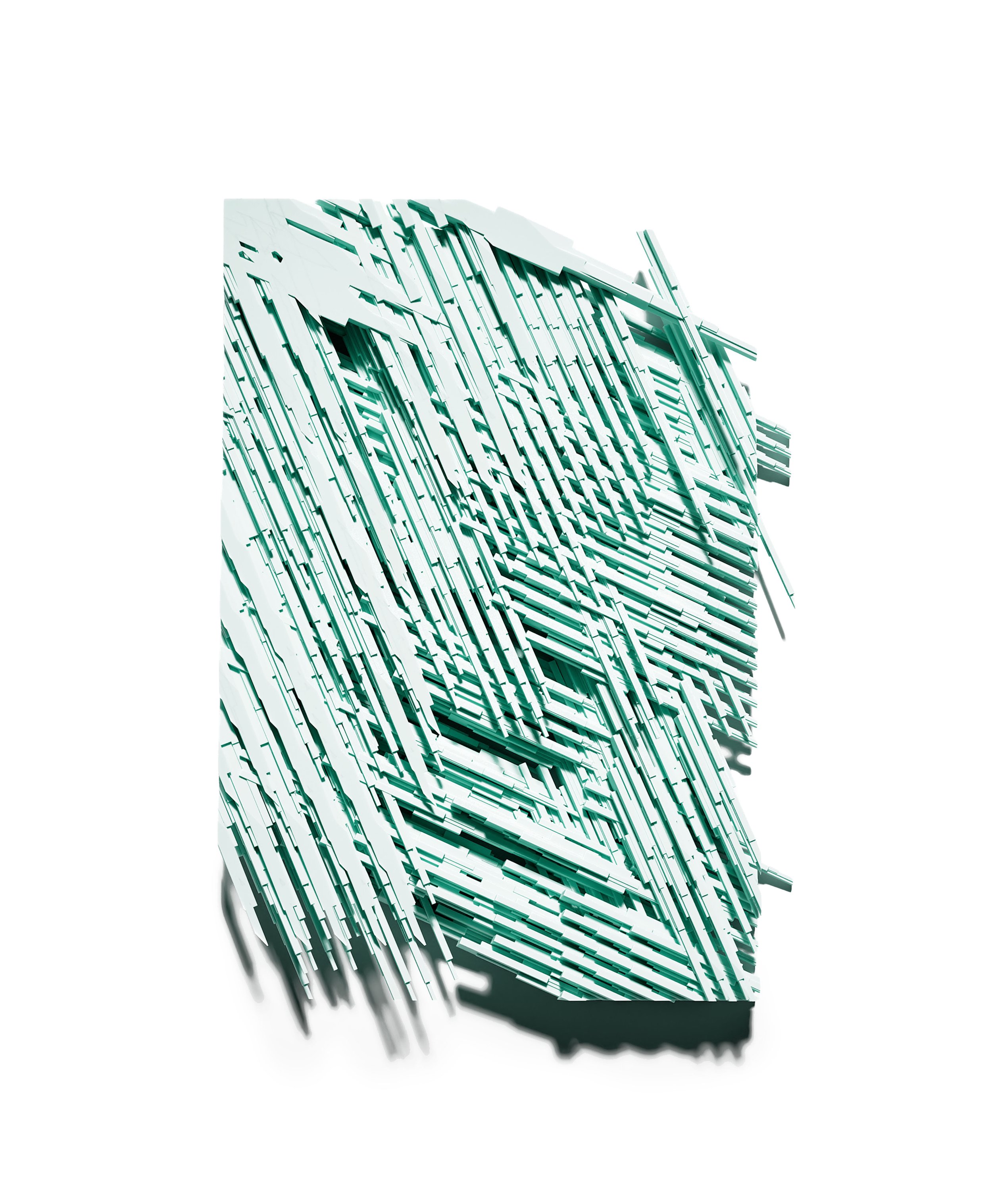
Fray. Bundled Thatch.
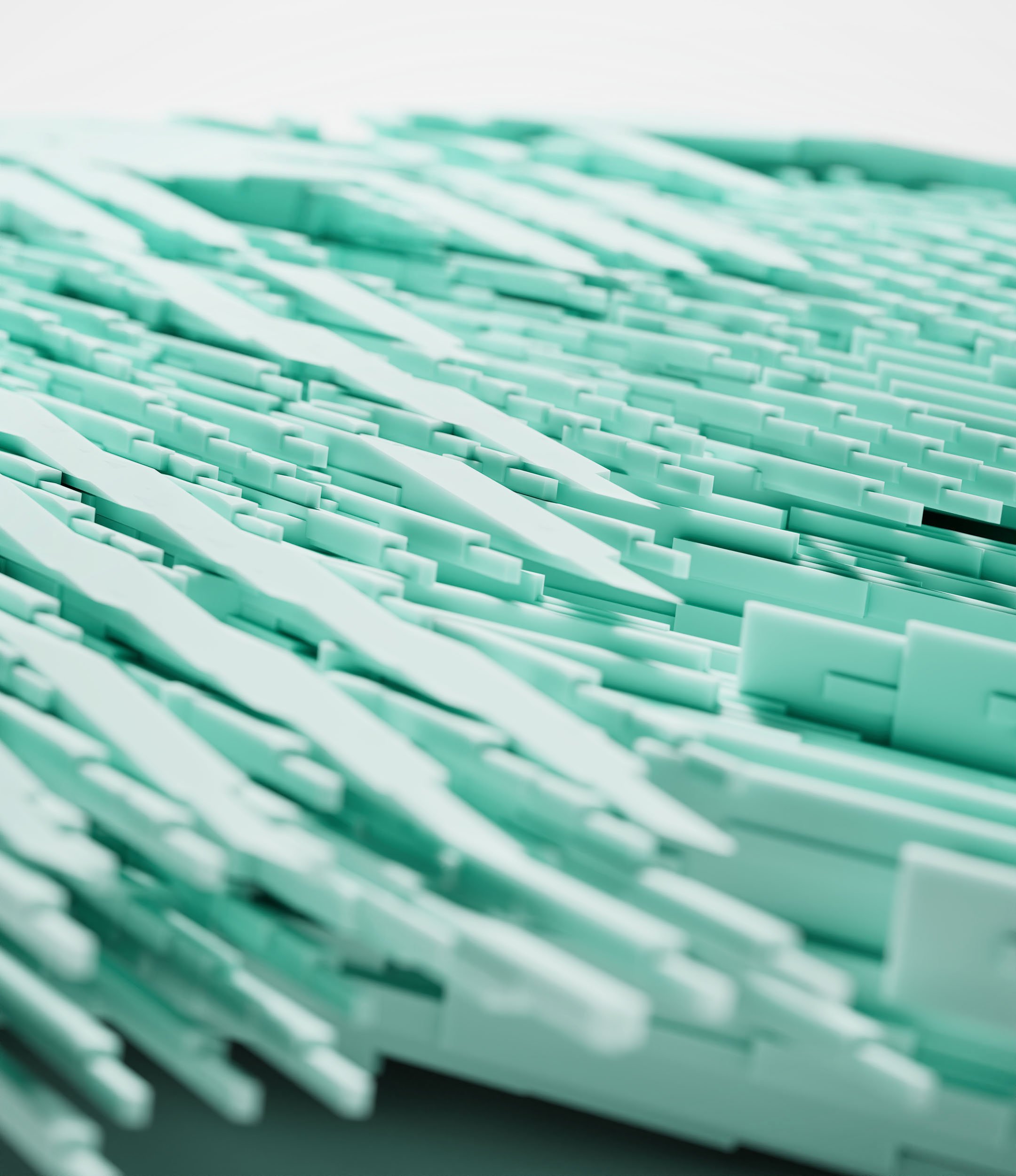
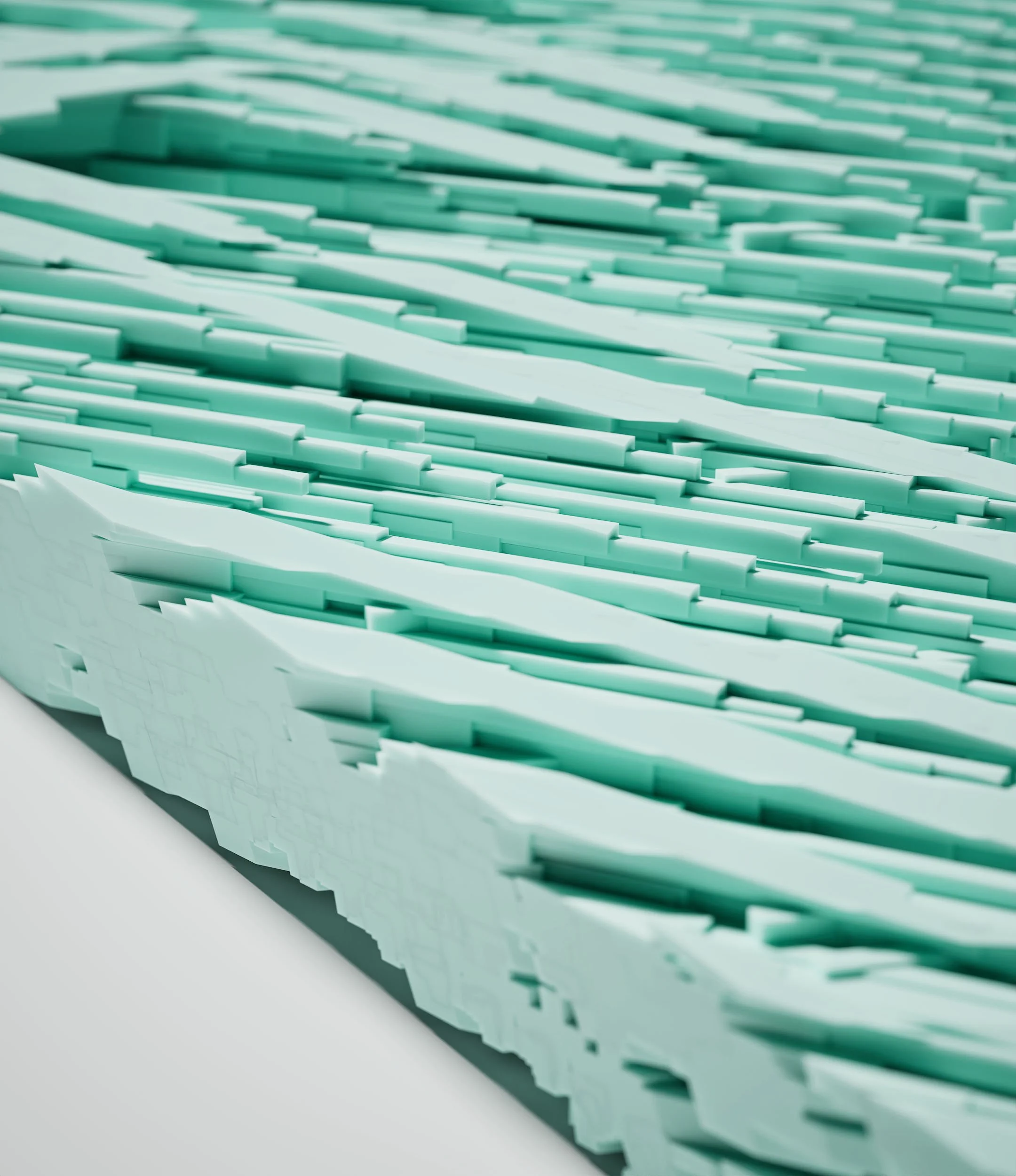

Rift. Striated Bars.