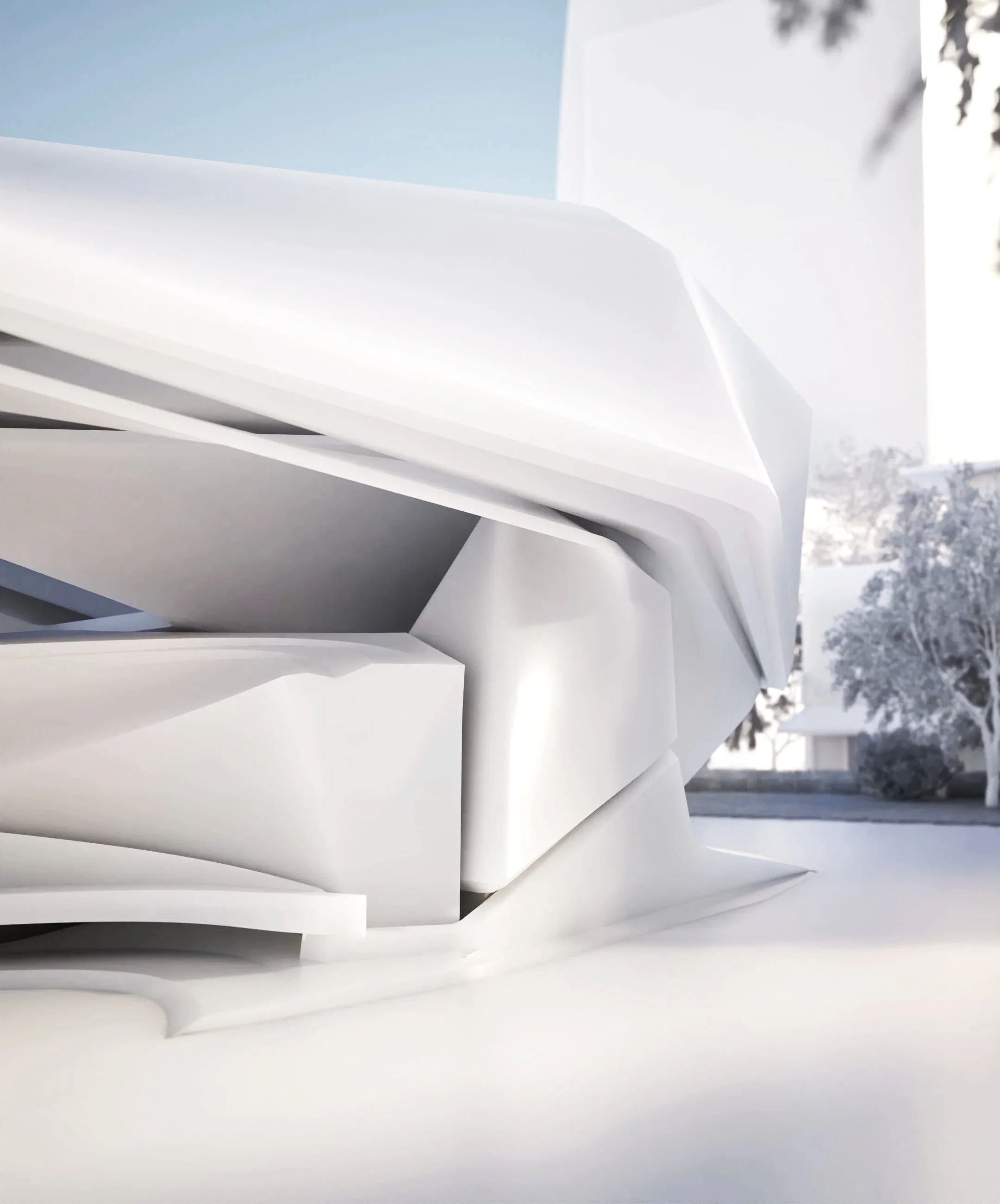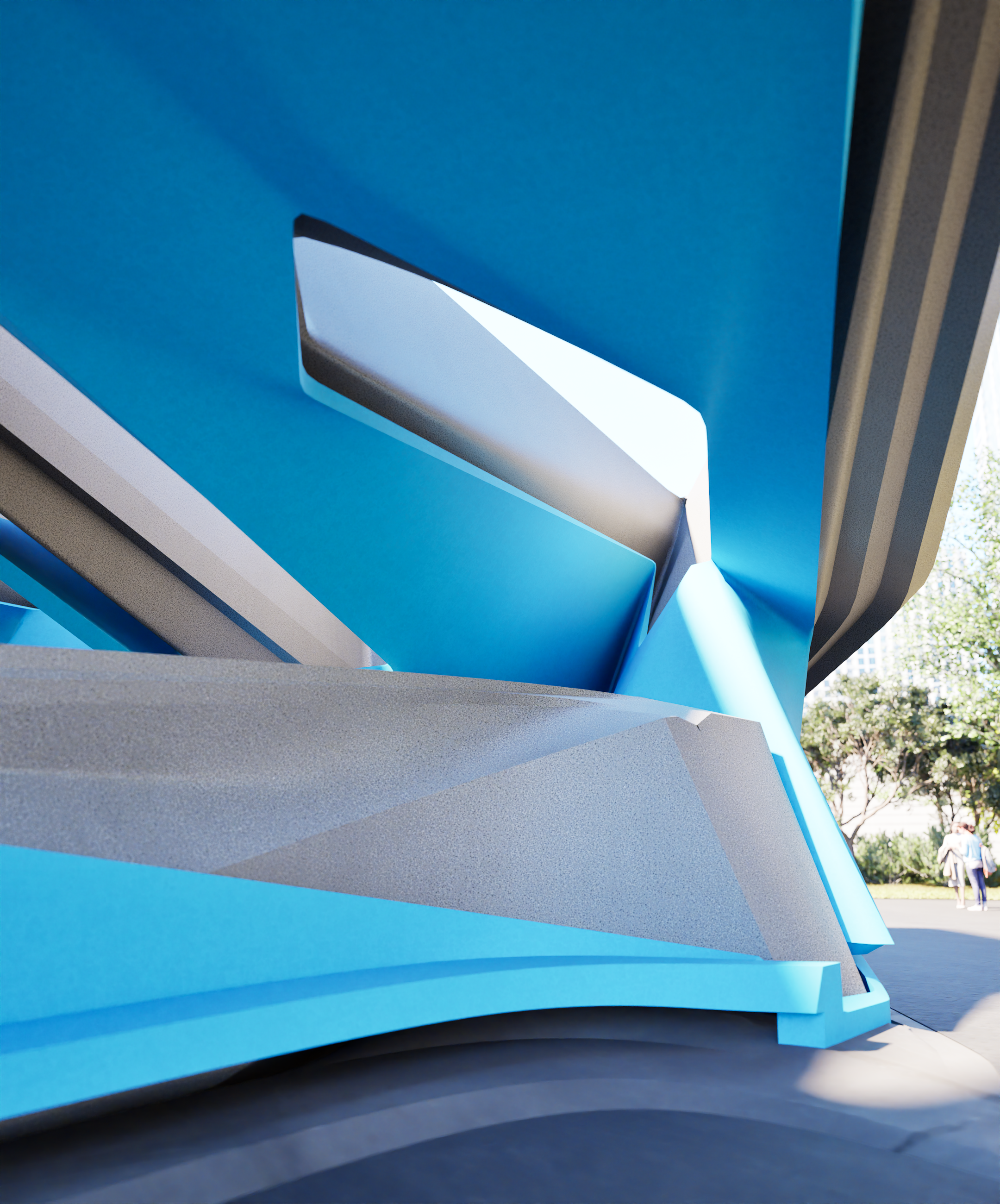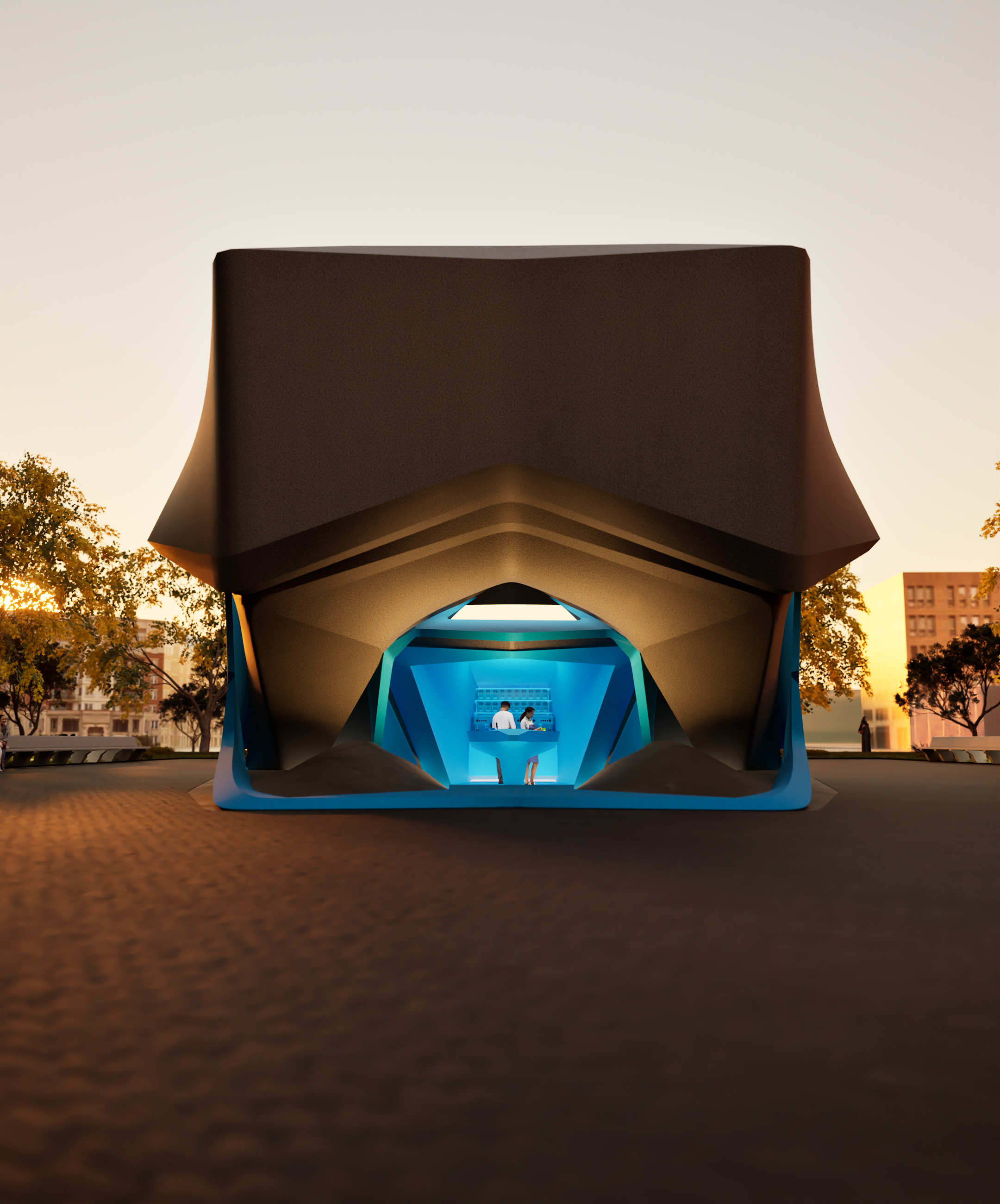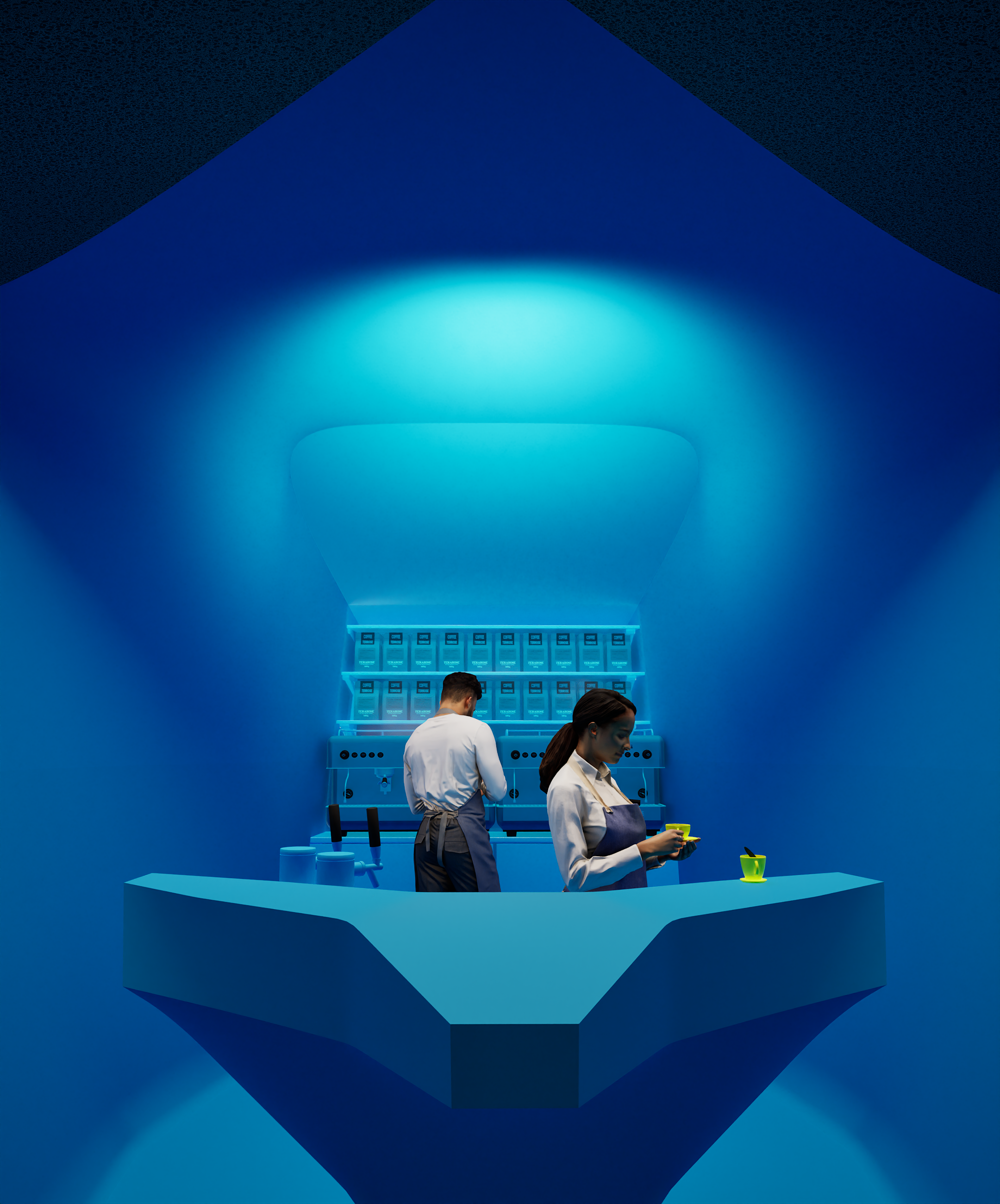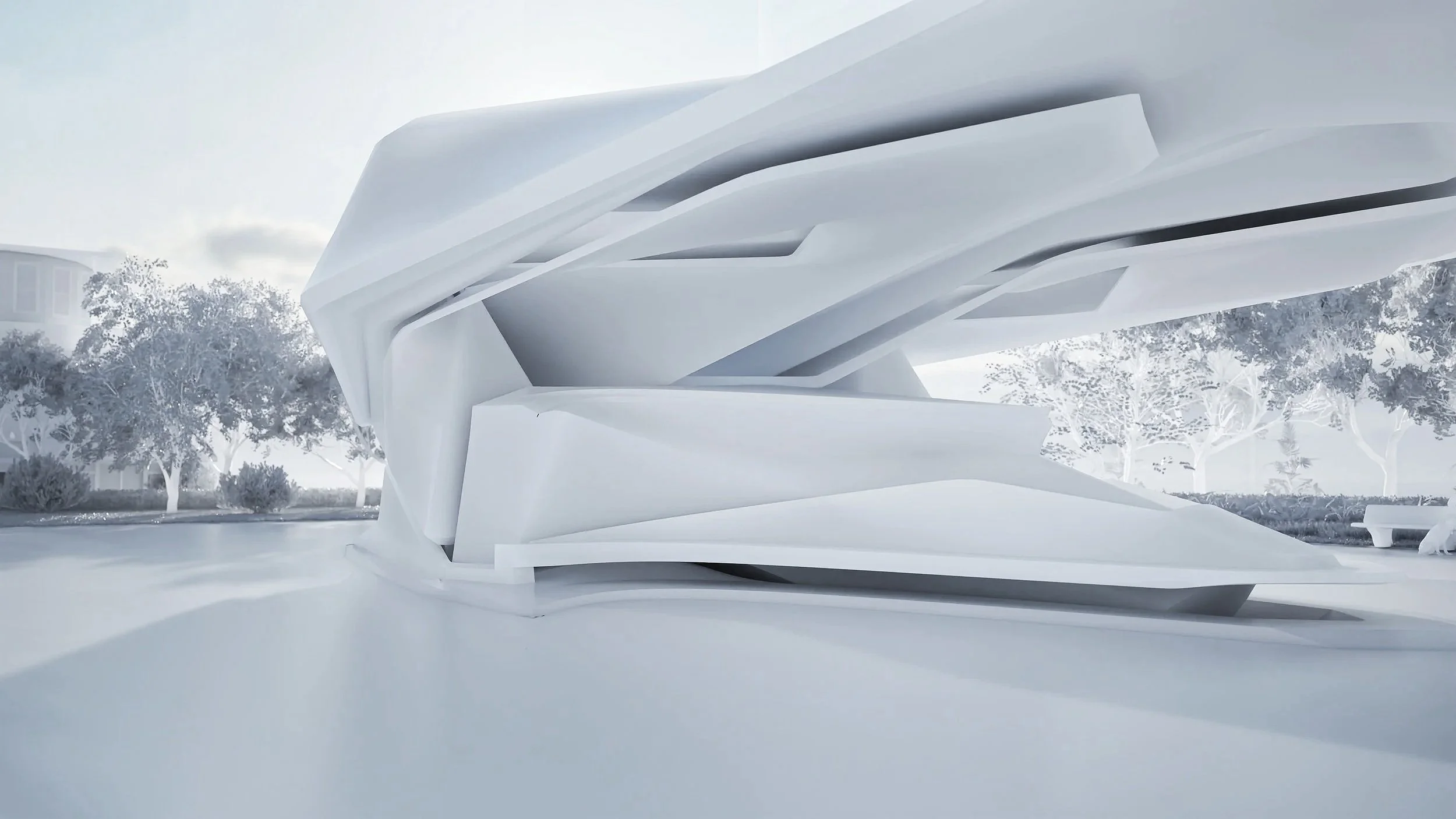
HUSK PAVILION
INTRODUCTION
Manufacturing complex geometry in concrete has been historically labor and material intensive, requiring timber formwork to cast continuous concrete shells ‘on-site’ and ‘in-place’. Building envelopes developed by designers whose formal ambitions relied on these techniques, architects like Felix Candela, Eduardo Torroja, and Pier Luigi Nervi, required innovative methods of man-made fabrication to construct their works. As surface panelization remains a specialization in architectural design disciplines, facade consultants like Front, Zahner, Quarrastone, Kreysler & Associates, and Avante leverage digital tools to combine technical expertise and artfully-minded approaches to construction. In the last 30 years, Glass Fiber Reinforced Concrete (GFRC) has contributed significantly to this industry, allowing for the fabrication of doubly-curved forms in thin shell applications in architecture. Admired for its light, yet durable properties, GFRC is about 75% lighter than traditional rebar-impregnated concrete, making it an ideal material for building envelopes. Blending performance and aesthetics, it is easier to handle and requires less supporting structure than typical cladding systems. In addition to its versatility in construction, it is also a dynamic material in its relative pliancy, using recycled pozzolan and glass within fewer quantities of cement.
Location: Cincinnati, Ohio
Program: Public Pavilion
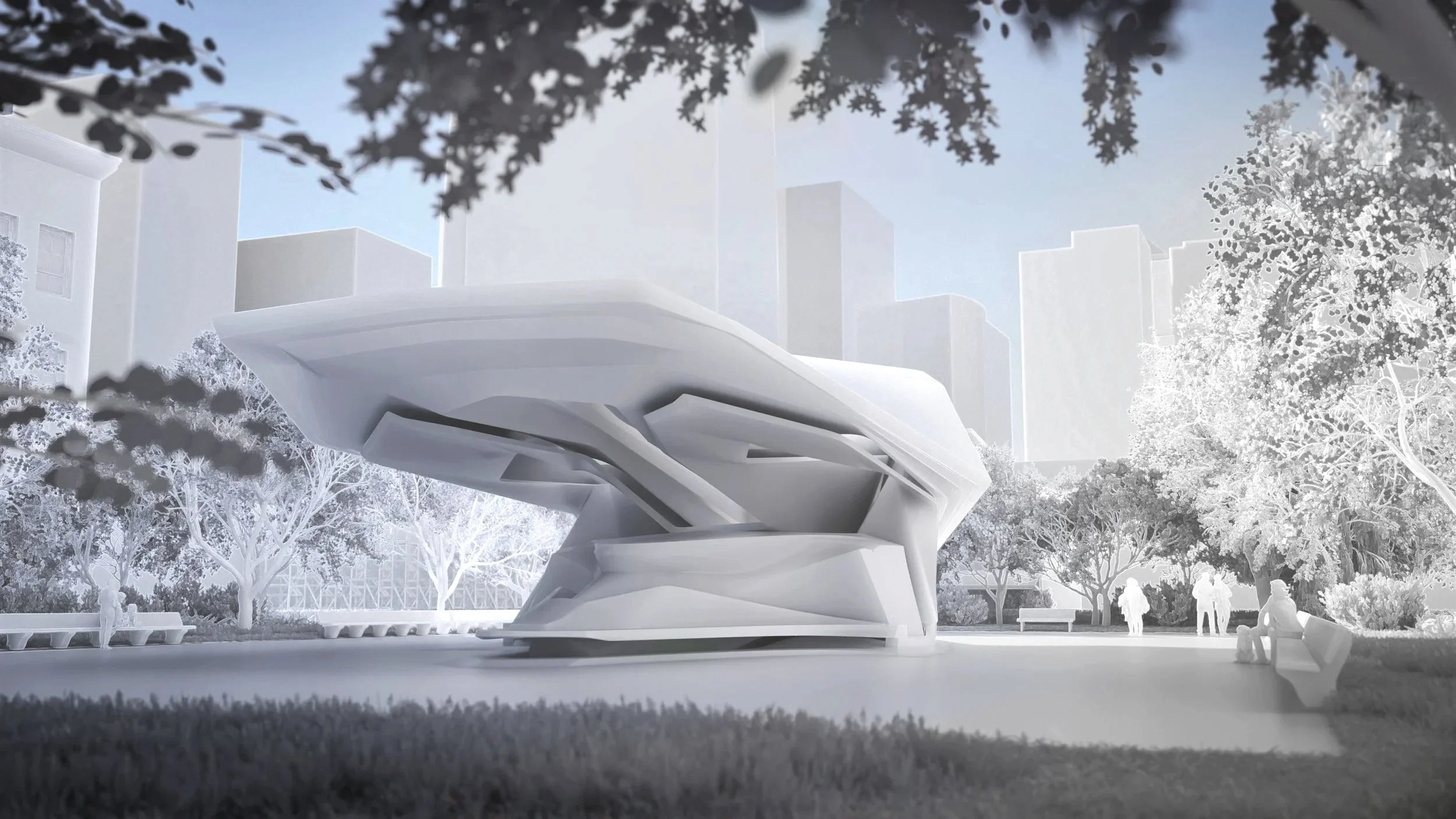
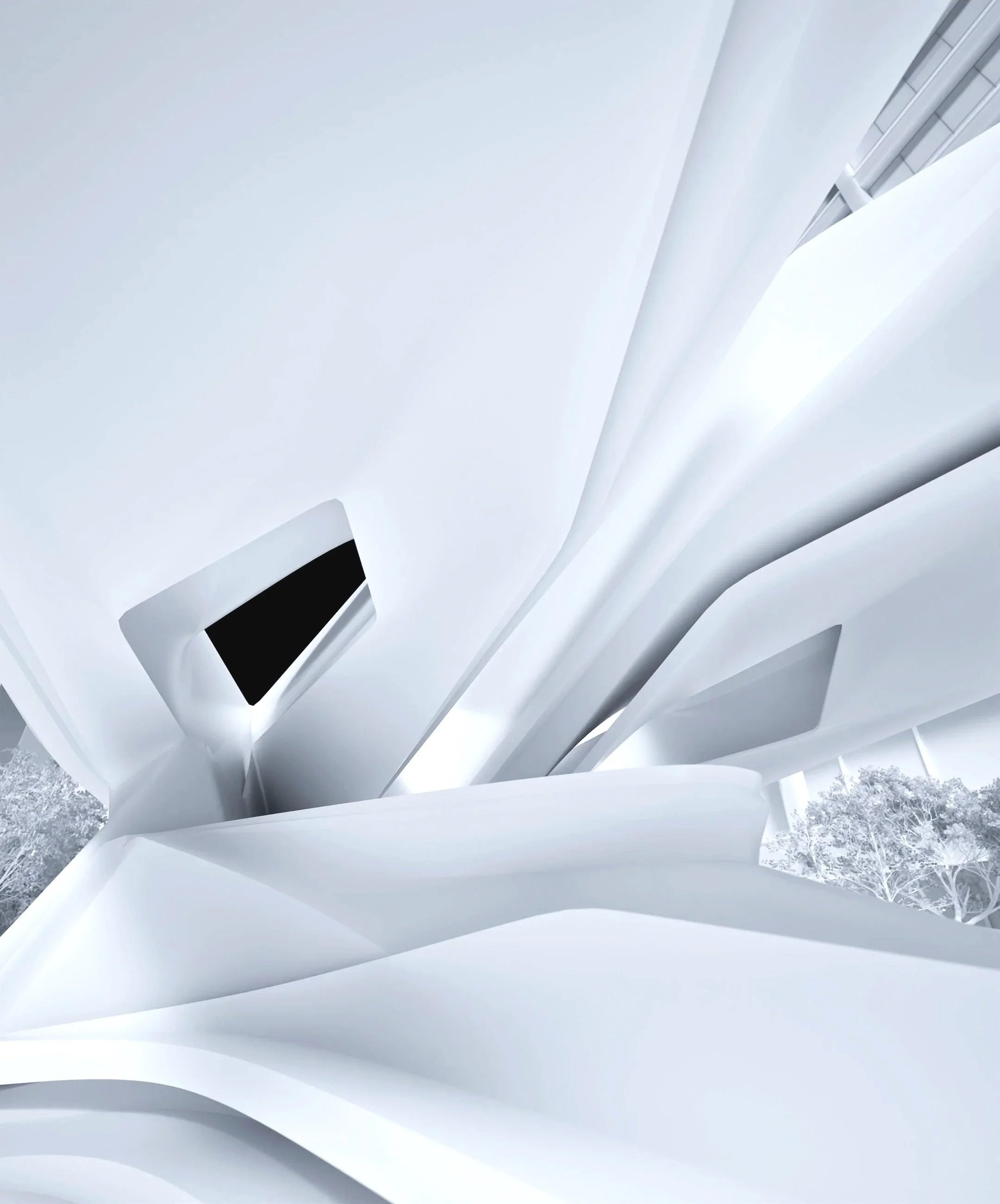
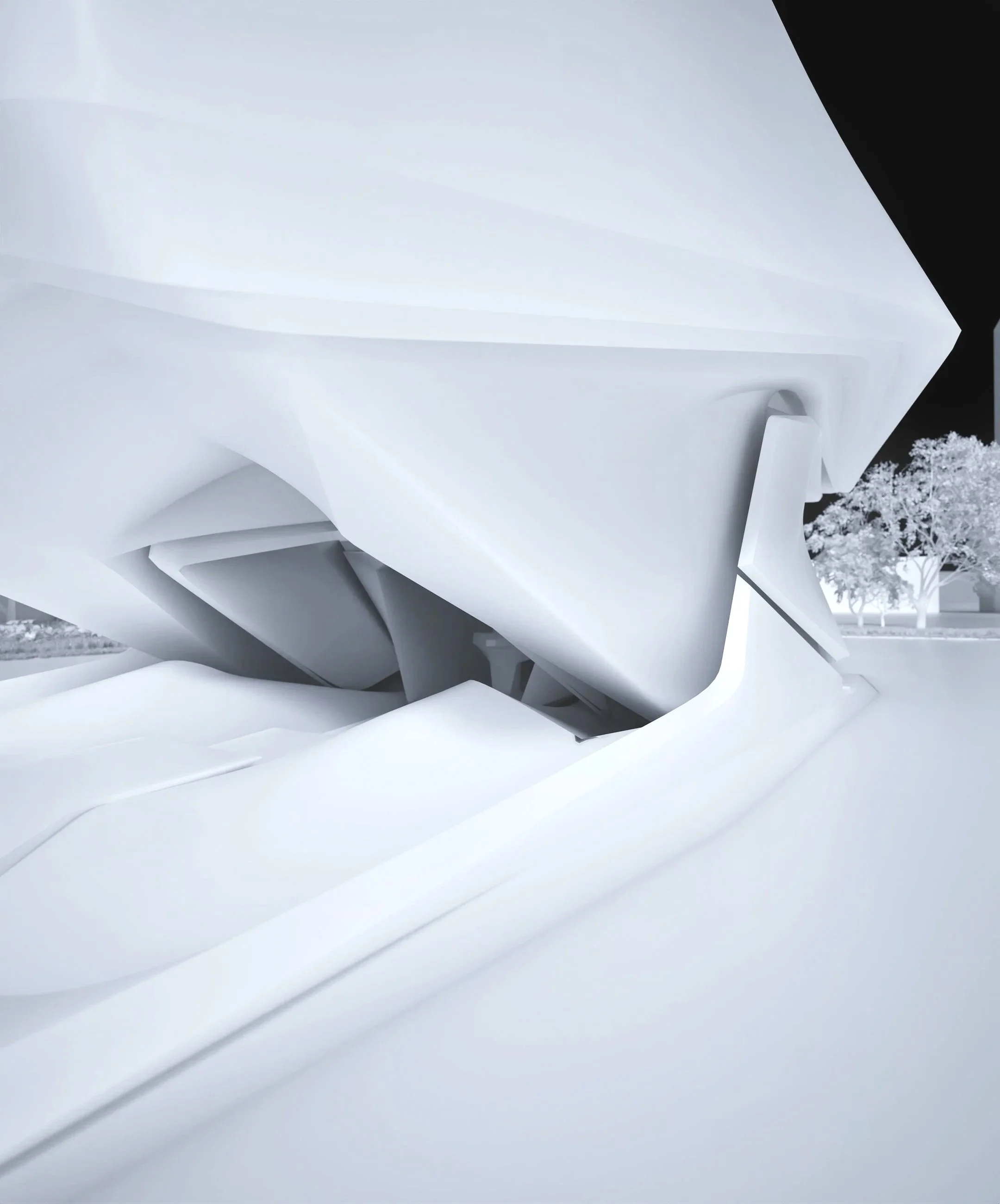
large format printing
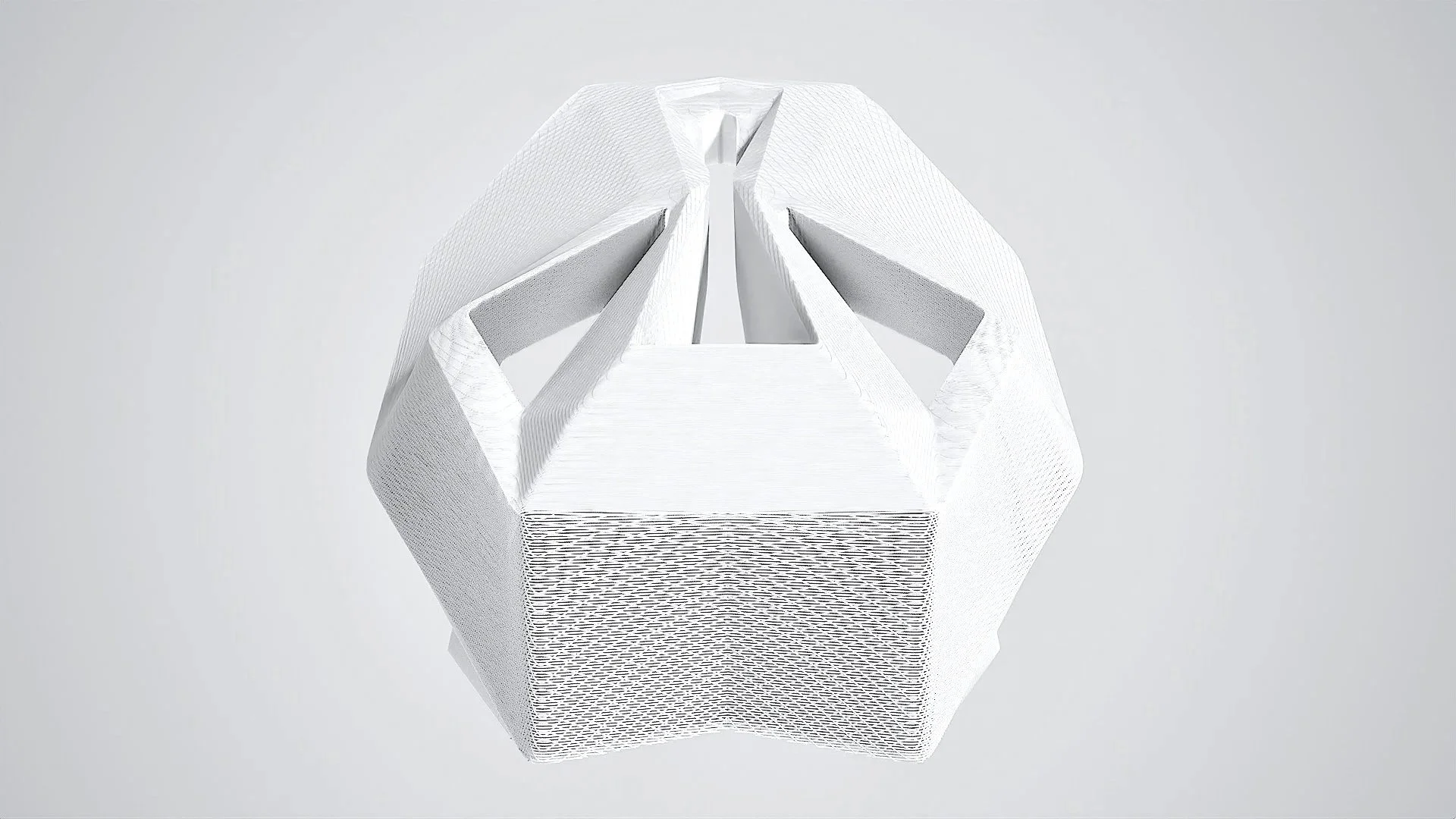
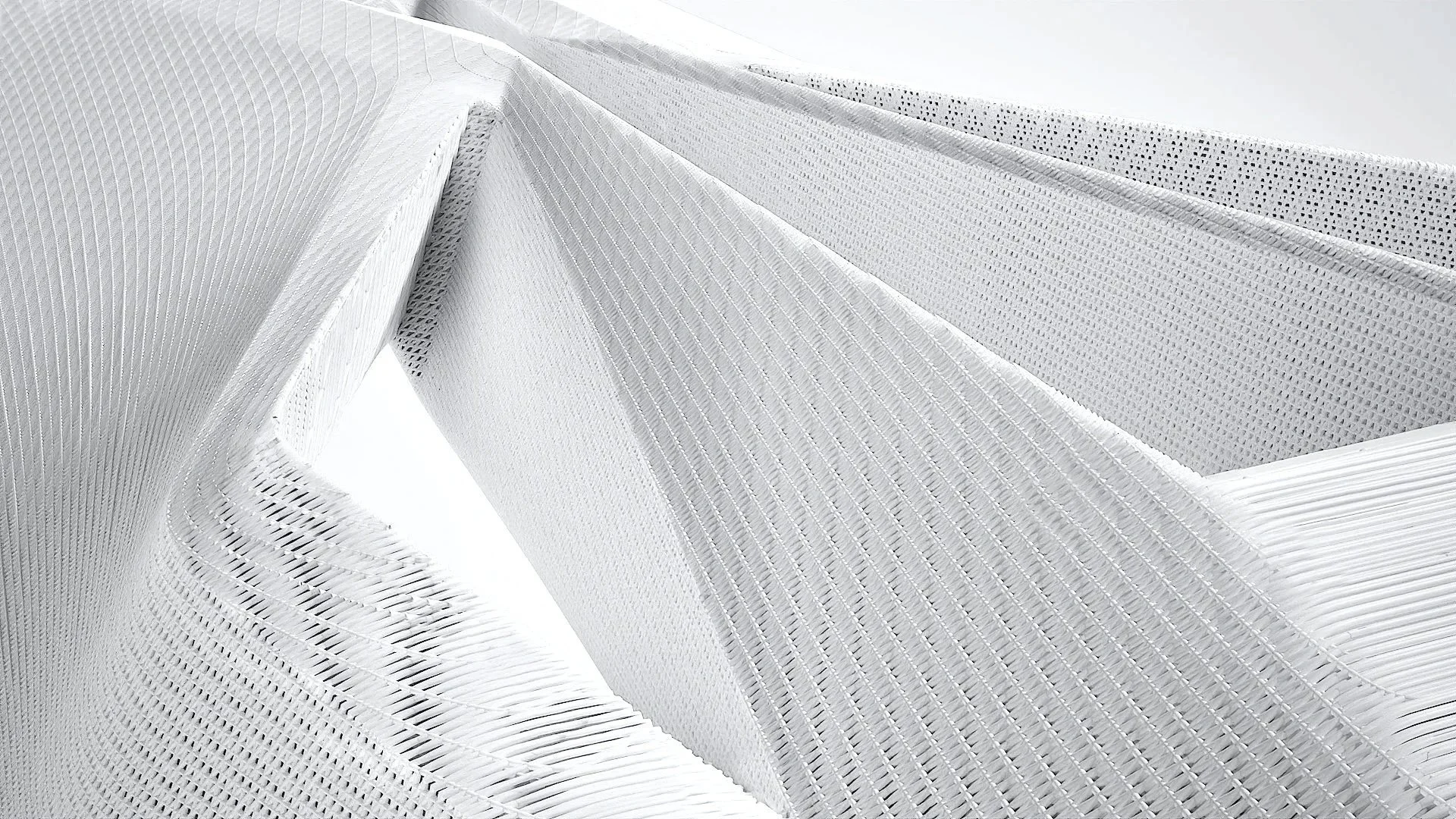
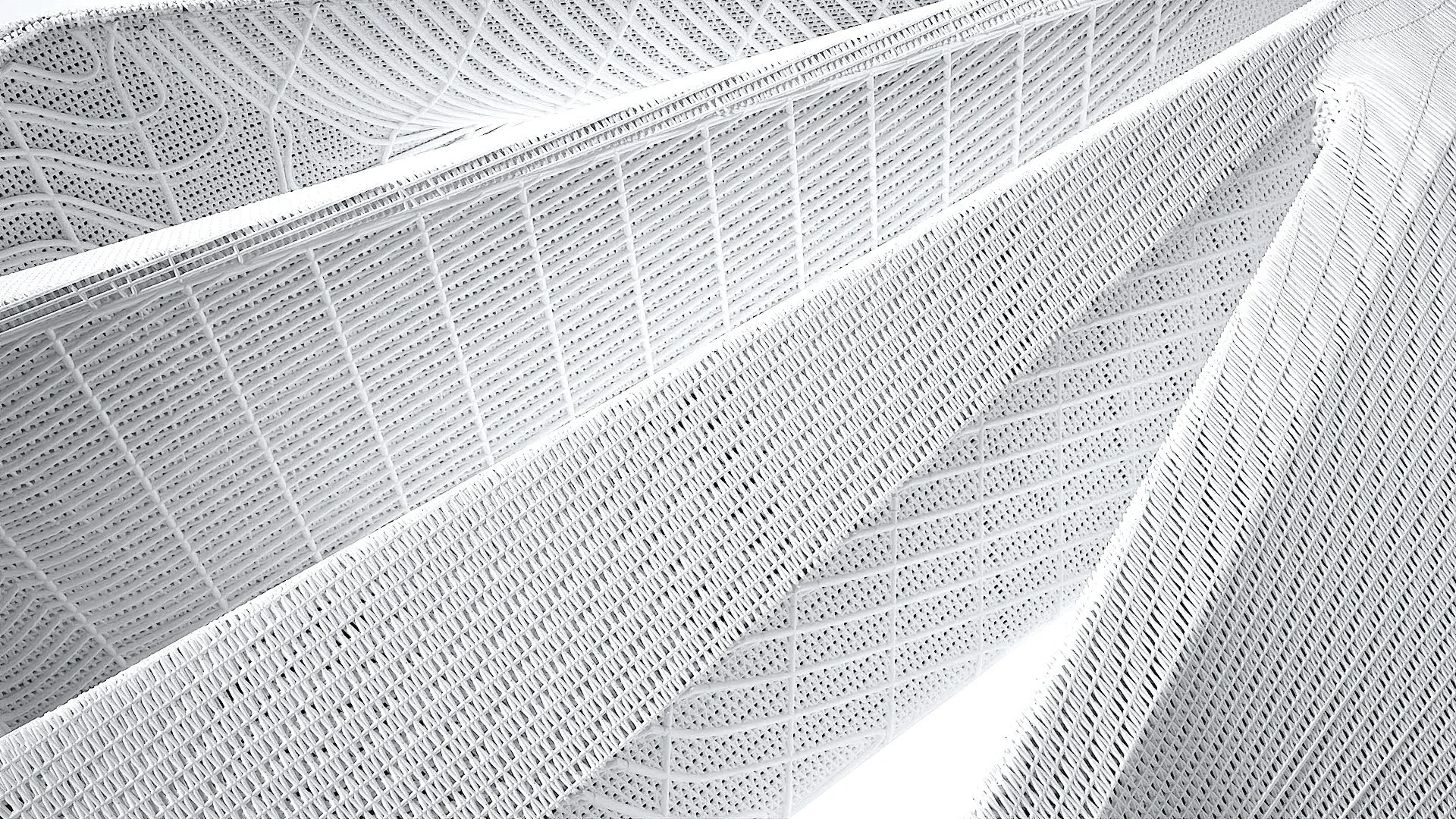
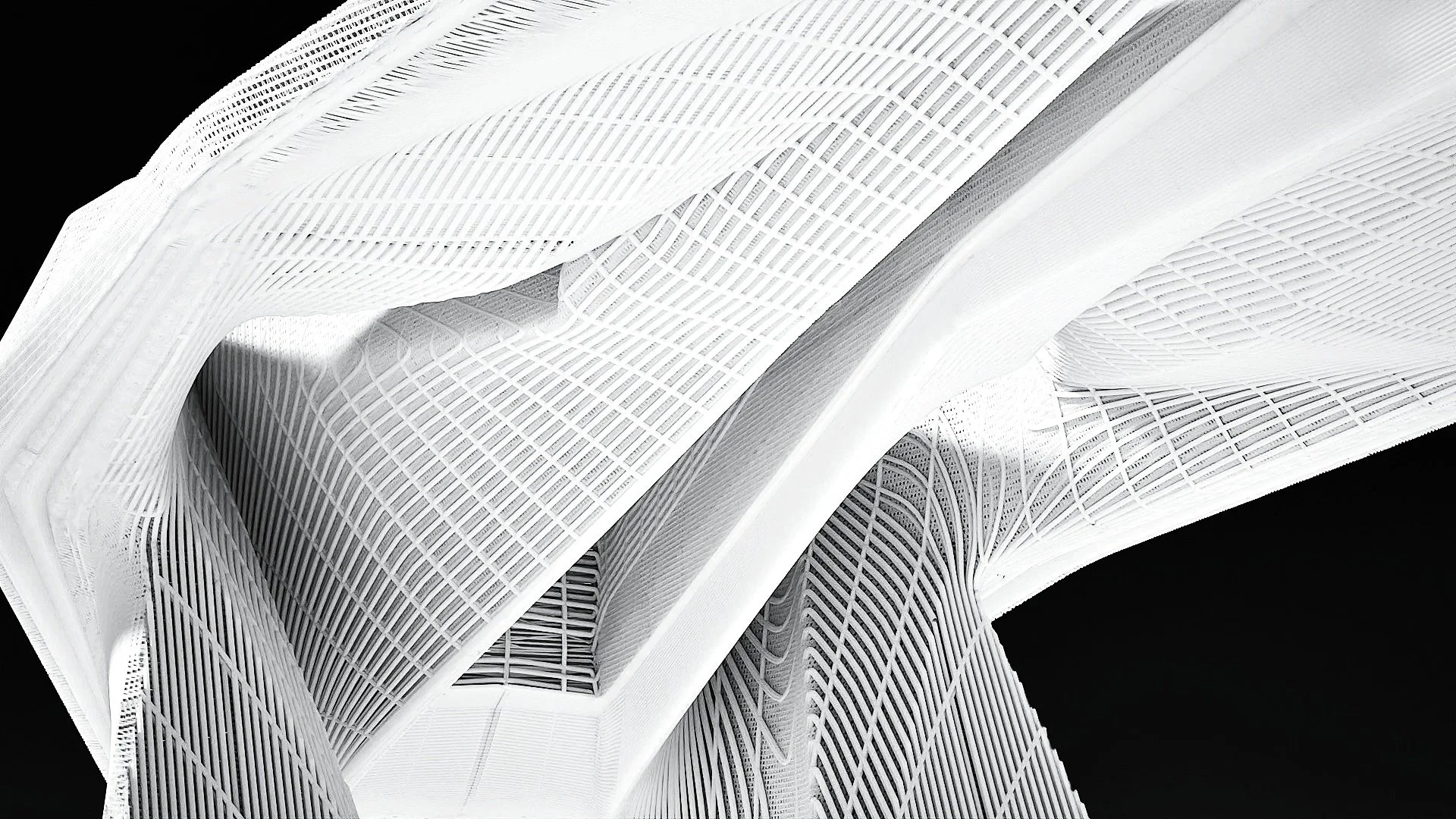
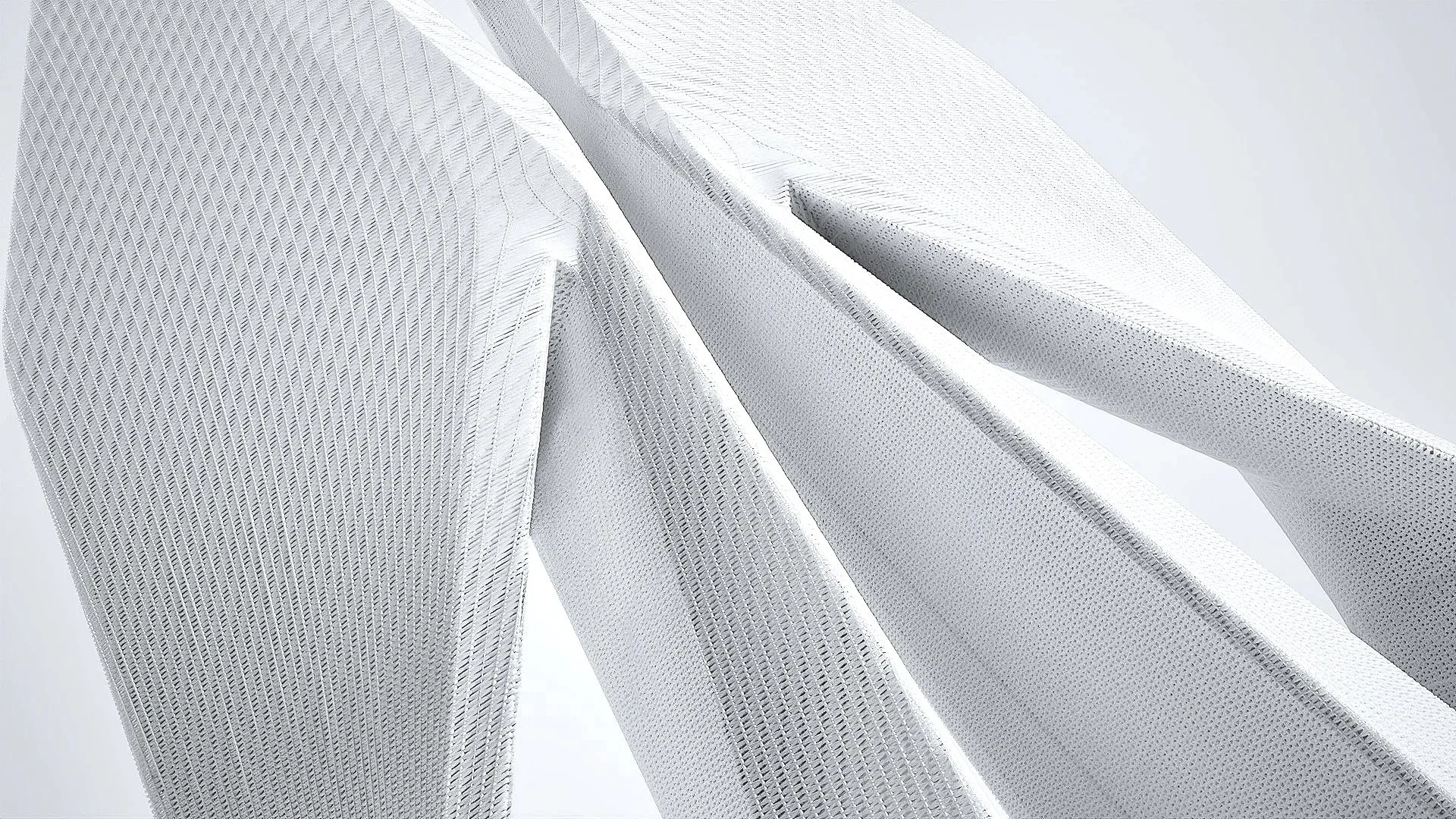
Rather than a typical downward-facing extrusion on a flat surface bed like in a tabletop 3D printer, the machine path is composed using a 6-axis robotic arm fitted to extrude binding material in multiple directions, accommodating surface curvature. Along a tool path that draws the material in place, the formwork is infused with structural channels and patterned stiffeners to dynamically thicken its surface as it builds by layer. The result is an articulated armature, composed to create a smooth exterior and structurally responsive interior. Creating rigid, lightweight composites from printed material uses the double-sided surface to combine formal elements into a permeable profile of stiffening channels and rails. As the print head extrudes along its defined path this surface integrates their multi-directional pathways into a continuous form, making a hardened, corrugated fabric.
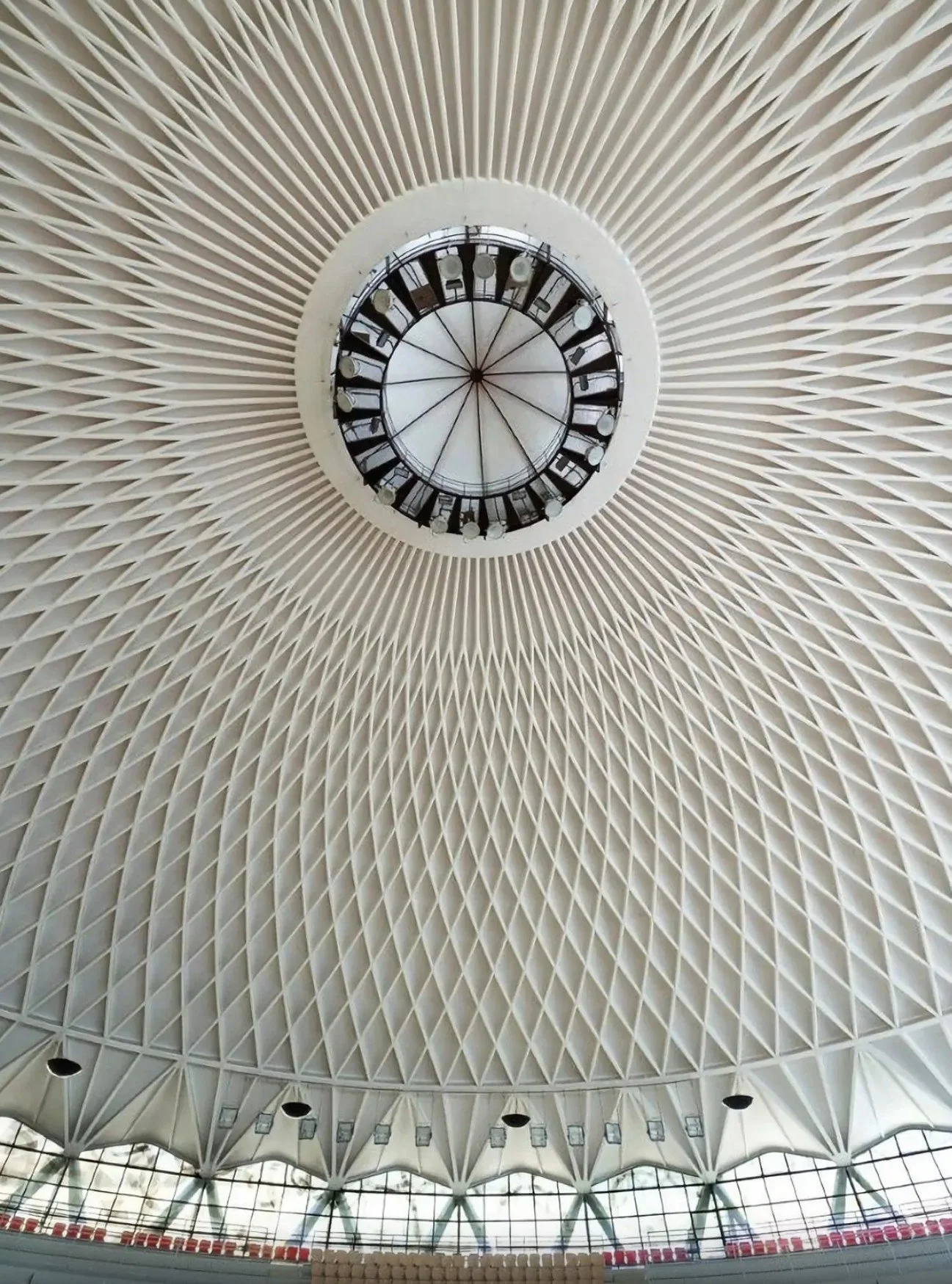
Palazzo dello Sport (Sports Arena). P.L. Nervi and M. Piacentini. Rome, Italy. 1955-59.
Photo by Mario Carrieri, courtesy Pier Luigi Nervi Project, Brussels
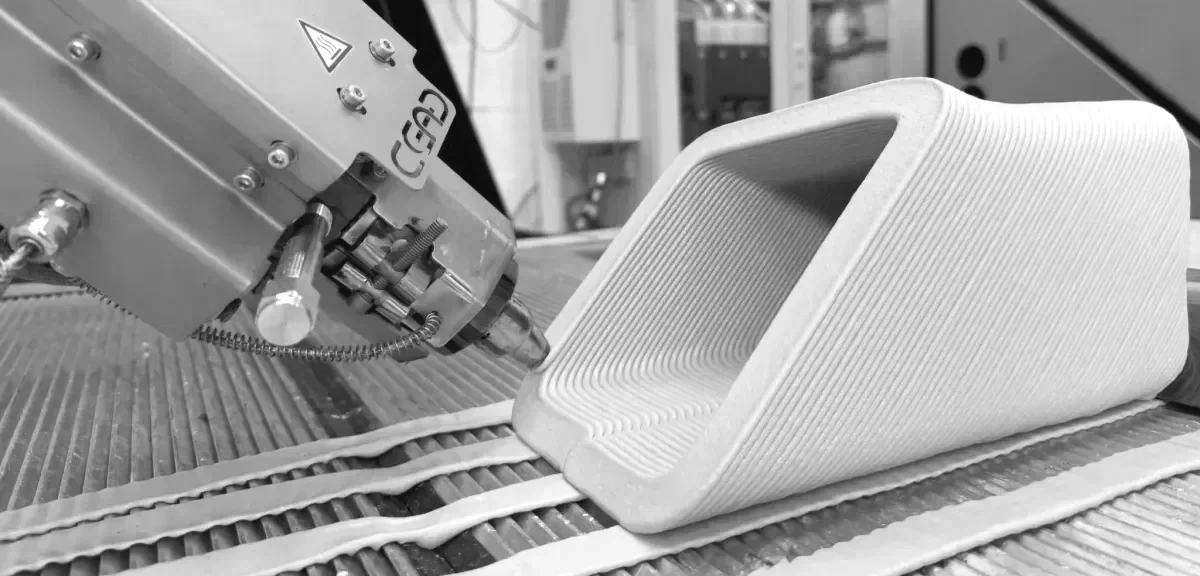
Large format 3D printing with PIPG.
Credit: CEAD
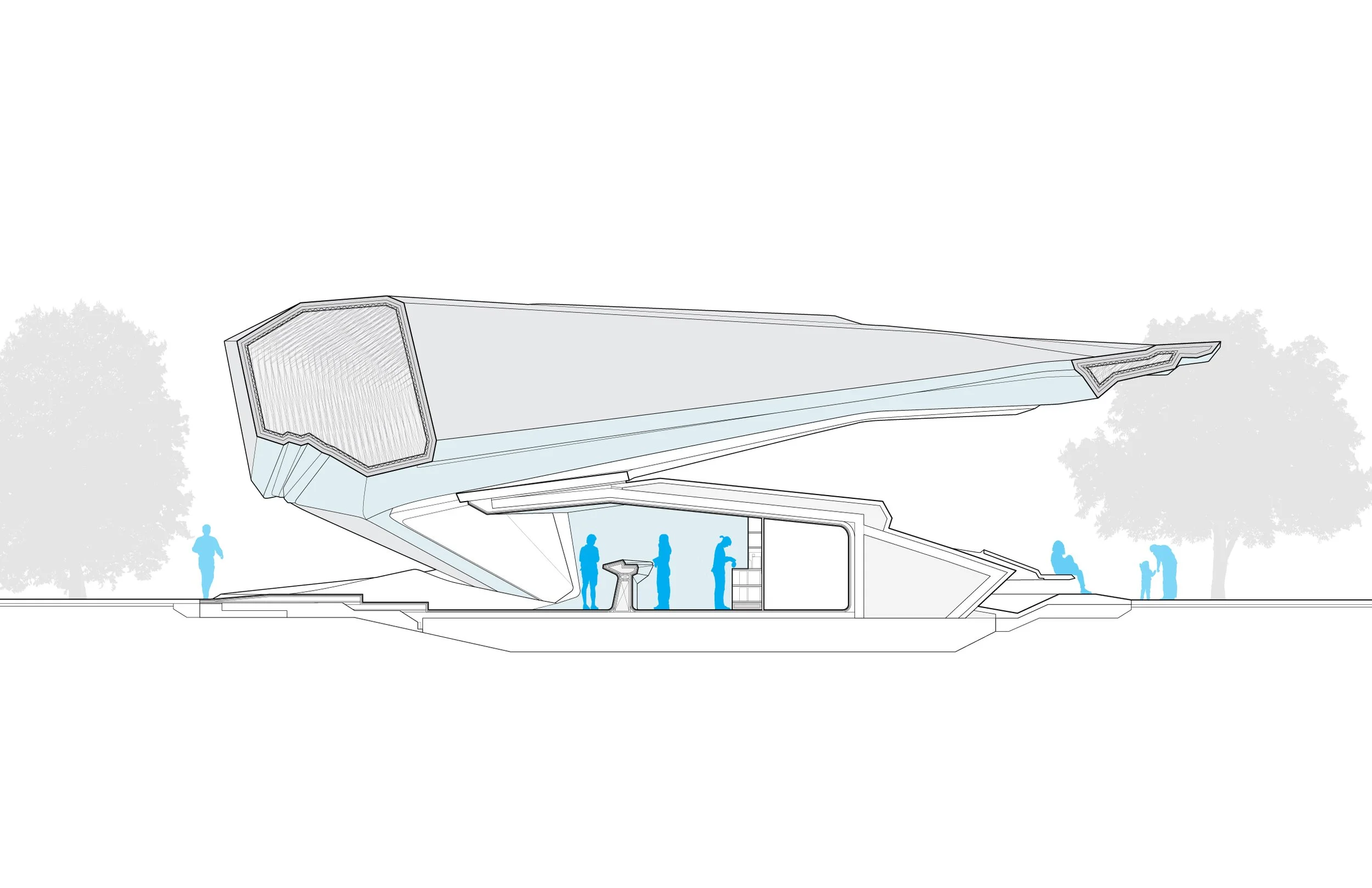
woven composite
Woven together to create a composite, it is tactically embedded in the geometry to reinforce the GFRC process bonded to its outer shell. Like the membranous layer of a husked shell, the interior is covered in a supportive sheath, molded to articulate the double-sided performance of the overall design. Instead of shedding its formwork, the structural liner within each part acts as a fixed skeleton that remains in place after production with interfacing connection plates for parts to be fixed together. Originally developed for printing molds for metal casting, industrial overscale printing can fabricate molds at a very high resolution for formwork. Rather than using concrete as an extrusion, the printing process instead develops the formwork for GFRC layup to be rapidly and more effectively applied. Interpreting these near-future applications for architectural design, the Husk Pavilion leverages these technologies to produce a lightweight canopy in Cincinnati’s developing Court Street Plaza.